3/29/25-3/31/25
Having never been beyond Hatcher Pass within the Talkeetna Mountains, I spent most of the winter waiting for snow to grace the granite filled range. After an exceptionally wet storm in late January that caused any snow that could slide to do just that, the Talkeetnas were primed for stable conditions. Snow began gracing the mountains in February and by the end of March it seemed traverse season was on. With a clearing in the skies and a partner available for a long weekend, Brian and I set out to explore the hut system that lived behind the popular day skiing location.
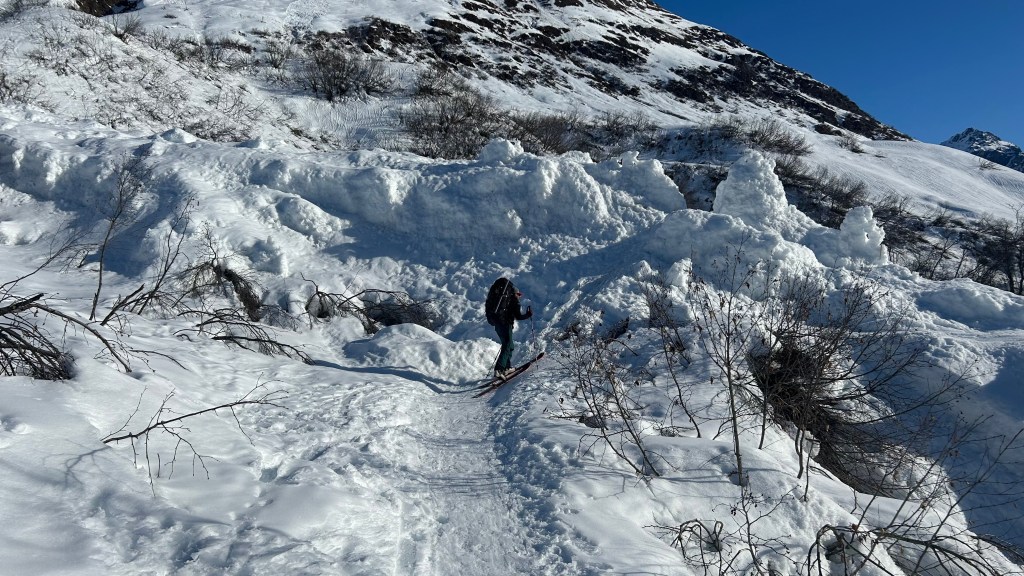
Reports of 20+ people in the Snowbird hut the weekend before had us unsure of what huts we wanted to utilize, but we did know that we’d start by heading up the Mint valley. From there, we would decide if we wanted to spend the night there or if time allowed we considered continuing onwards to the Dnigi Hut where we were sure to find a near empty hut. Luckily for us, Brian and I got his car stuck while grabbing gear in the morning, and we were left scrambling to get his car up the steep icy slope that found ourselves at the bottom of. With the help of some heavy duty chains and tight driving, Brian was able to get his car up the slope. By the time our morning shenanigans were through, we found ourselves in the Mint lot around 11am, and our hopes of reaching the Dnigi hut began to dwindle.
With the Hatcher Pass Boulder Dash race going on that morning, the lot was jam packed. We hoped this scared people off of doing the traverse, and as we started down the Mint valley it seemed there was some truth to our hopes. On our way up the valley, we saw one other group who turned off around Arkose. As we approached Heartbreak Hill, we saw a group coming down on snowshoes. When we reached them, we asked how busy the huts were. When they told us they elected to pitch their own tent for the evening, we thought we were going to be sharing the hut with a gaggle of people. Our worries subsided as one of them told us they saw 5 headlamps the night before and they found that too busy for their liking. To each their own I suppose…
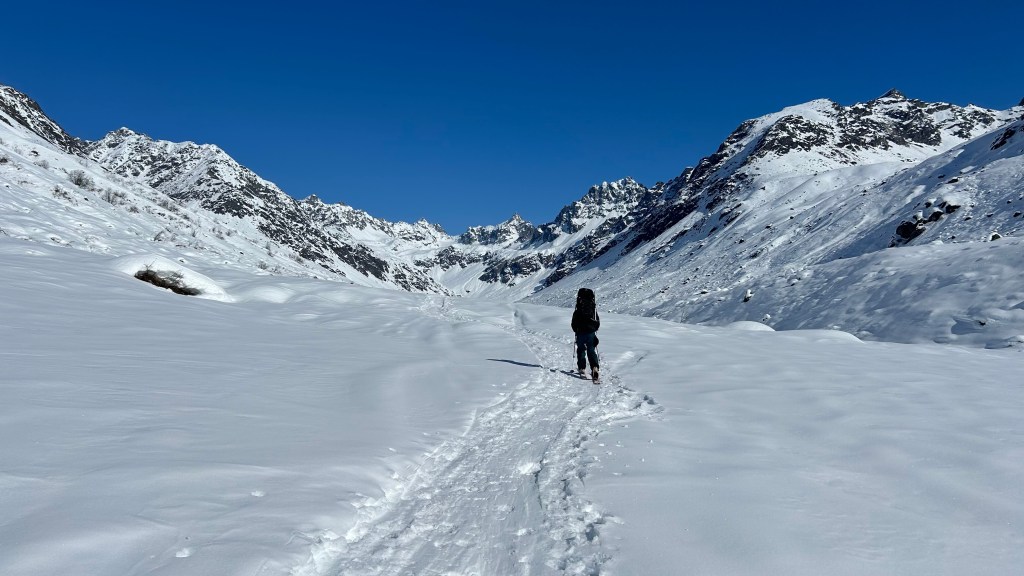
As we continued past the group of snowshoers and approached the Mint hut, we were ecstatic to find it empty. We dropped our bags and headed in, still unsure if we were going to move further but certain we wanted to make water after the hot 8 mile walk in. As the snow was melting we watched two skiers come down the hill that leads to the hard-to-find hut. We greeted them and they informed us they were meeting people who were out skiing for the day. With the good company and plenty of room in the hut, Brian and I decided to rest our heads in the Mint hut for the night and to proceed on to the Bomber hut the next day.
After rehydrating and refueling, Brian and I decided to go for a quick ski on the bunny hill behind the hut. We toured to the terminal lake at the toe of the Mint Glacier and enjoyed the great views of Montana, Spearmint, Kendalmint, and Troublemint peaks. The skiing back to the hut was okay, but did not inspire hope for big powder lines. That evening we met the rest of our hut mates, one of which I had met the winter prior and another Brian knew from a packrafting course. Most of the hut members were heading out the next morning, but Brian’s buddy Eric was heading onwards towards the Bomber hut, so we agreed to travel together in the morning.
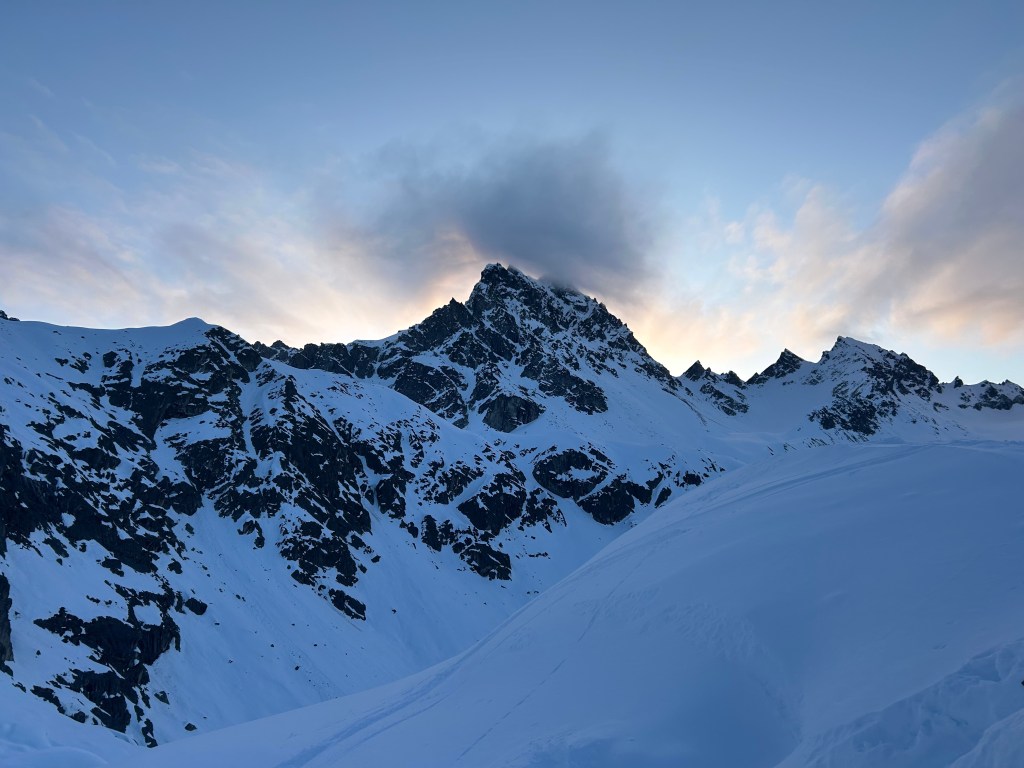
The morning brought clouds and soft light, making for firm snow conditions all around us. After a slow morning, we found ourselves heading towards the Backdoor Gap. As the slope slowly gained in pitch, Brian and I were left hanging onto our edges with all of our might. Eric, being a wiser man than Brian and I, put his ski crampons on as the slope got too steep to comfortably ski. While Eric was doing the wise thing, Brian and I were left attaching our regular crampons to our boots and our skis to our bag. By the time the two of us were making uphill progress, Eric was already nearing the top of the pass. After a bit of booting, Brian and I caught up to Eric who was waiting on us at the gap.
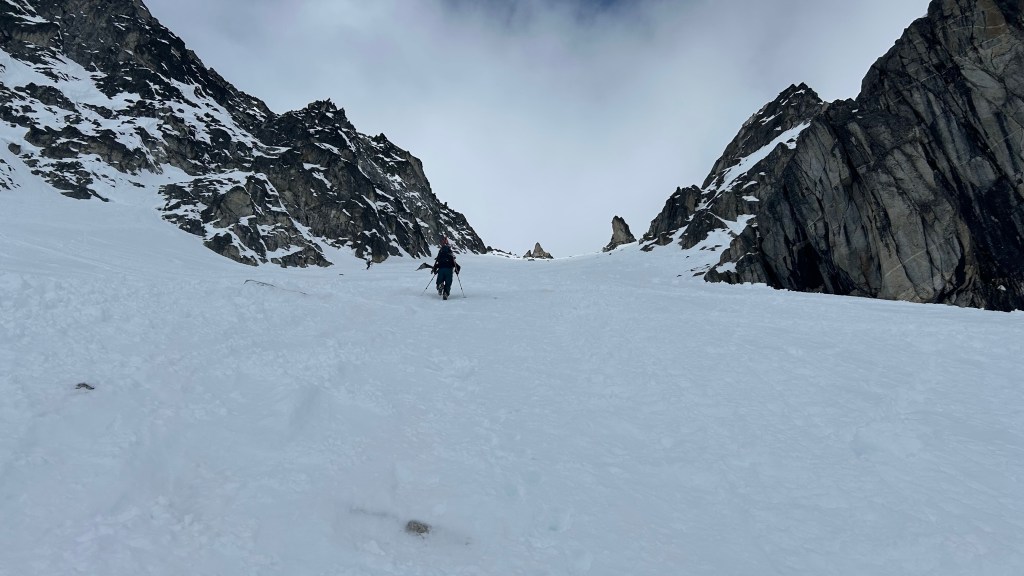
After scanning our surroundings, Brian and I decided we wanted to ski the Bomber Glacier and Eric was in for the ride. We traversed the top of the Penny Royal Glacier and found a high pass onto the Bomber Glacier. Standing above the headwall that stood between us and seemingly endless glacier turns invoked feelings of uncertainty. The headwall looked bulletproof and steep. While there was no concern for an avalanche, an uncontrollable fall was very realistic. While the ski down looked harrowing, it was a small slope and the glacier lap waiting beneath it looked good enough to inspire us to go for it. Eric made the decision to rather ski the Penny Royal and meet us at the hut. I transitioned my Line Pescados from walk mode to ski mode, and made a jump turn into the headwall to feel the snow. It was consistently firm but edgeable, making me feel comfortable with skiing the headwall down to the glacier. A few scratchy jump turns mixed into a healthy amount of side slipping found us at the bottom of the headwall and onto pristine glacier powder. From the base of the headwall, Brian and I enjoyed a long and delightful low angle lap down the Bomber Glacier; our skis were shrouded by the blower powder that rose nearly to our knees. After seemingly endless powder turns, we pulled into the hut where we saw people preparing to head out for the day. We started chatting with some of the other group and found that we knew a few of the members, another example of the huge community we have going on up here. As Eric rolled in, the other group made their way off towards the Snowbird hut.
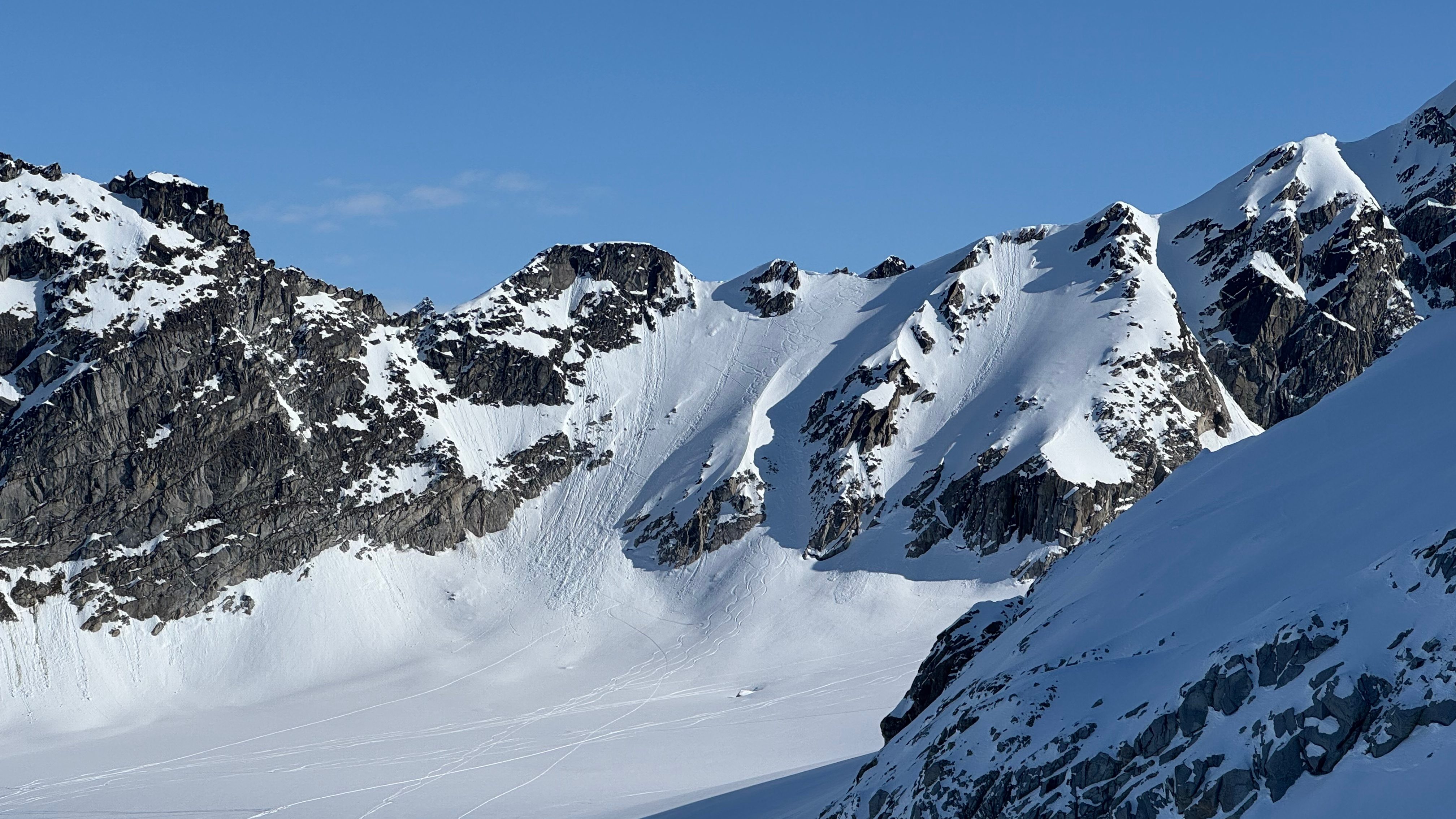
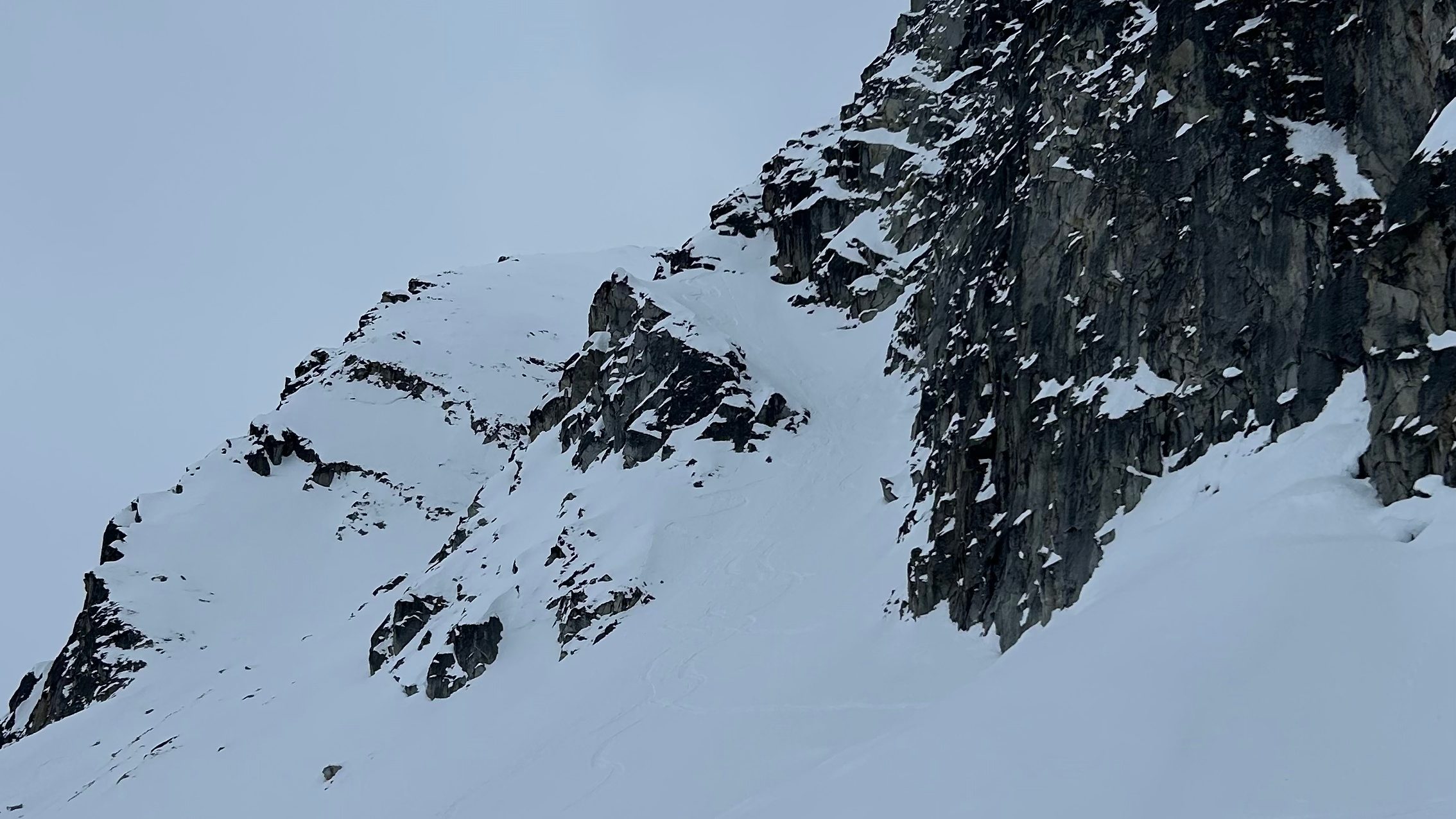
We settled in and melted snow to refuel for an afternoon lap, and before we knew it the three of us were heading back up the Bomber Glacier. Brian and I had our eyes on some of the obvious couloirs that rise above the glacier on the climber’s right side while Eric wanted to ski from high on the Bomber. As we climbed, my eye was brought to an untracked couloir between the two obvious bigger ones. I was open to other lines, but as we hiked up the “Banana Couloir” as I was calling it only got better. Seeing as the line was a bit shorter than the others, it seemed like an easy choice for an evening lap. As we climbed towards the apron, the pitch of the line came into perspective and it became obvious this was going to be a steep, sluffy line. As we approached the choke, it made sense to put our skis on our back and boot on up. At this point the snow was very deep, so I pulled my verts out and offered to break trail for Brian who had no float. As we booted, the pitch slowly increased until looking between our legs revealed the valley floor. At this point we pulled the inclinometer out and clocked the slope at 50 degrees, the perfect pitch in my eyes. We continued onwards and found a place to transition underneath a rock that marked the logical top of the line.
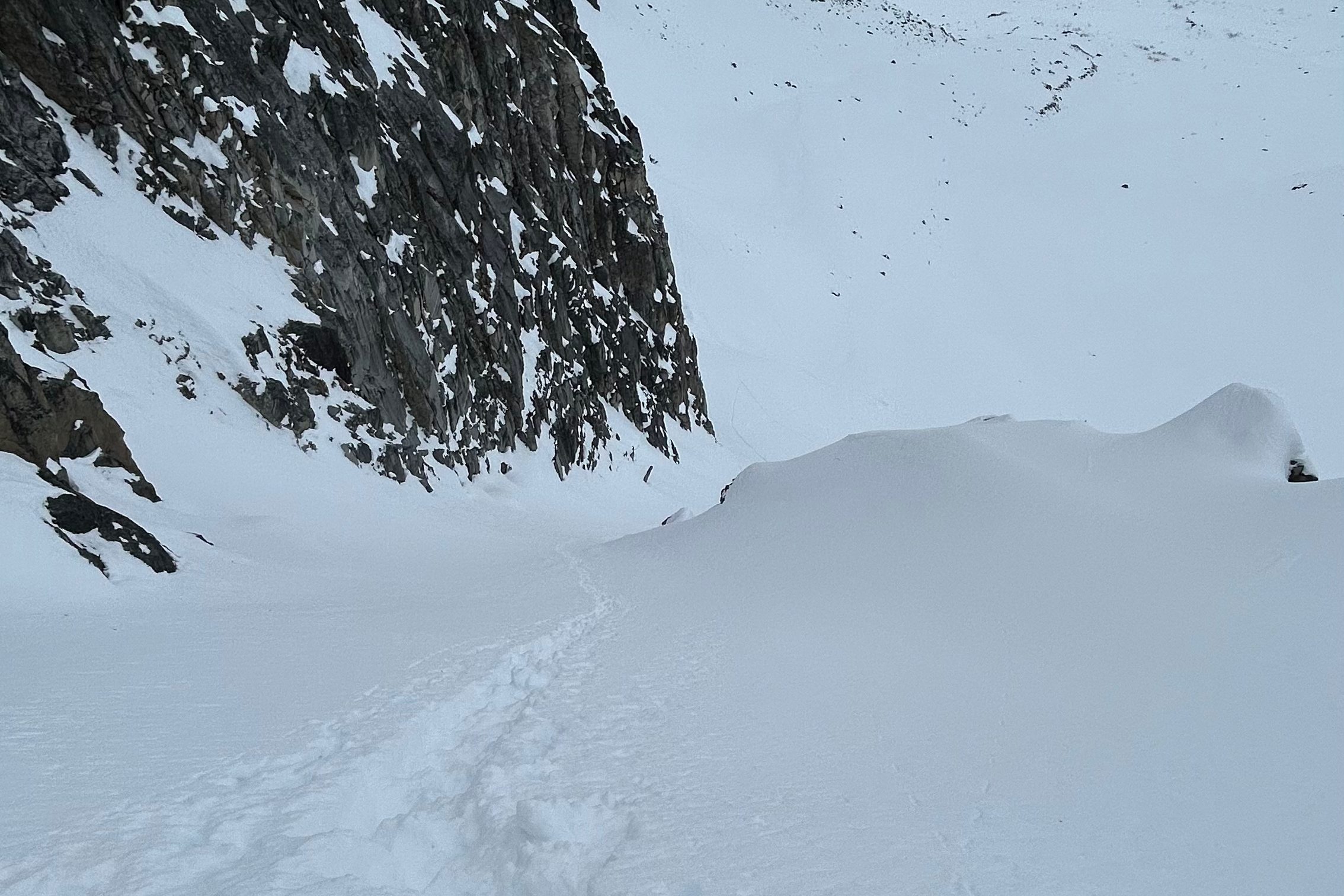
As we were taking the steps to prepare to ski, we were careful with each move as dropping any item could send it down our ski line if we were lucky or right over the multiple-hundred foot cliff that stood between us and the valley floor to our right. After a game of rock-paper-scissors Brian was set to ski first and stop beneath the choke to get eyes on me. While this meant a lack of freshies for me on the upper slope, I was going to get the whole line top to bottom. Brian set his skis in the fall line and found his first turn to be deep which continued in rhythm for the upper slope before his sluff caught up with him and ruined his pace. After letting the loose snow dump past him, he continued on past the choke and signaled that he was ready for me.
Brian seems to always give me good turns to work around, so when I started off the top I found myself spooning his turns instinctually. I knew I could avoid the sluff by skiing a bit faster than him, and after watching where the snow tracked through the choke, I was confident I could sneak through it without getting swept off my feet. With each turn I let me speed build until I came ripping through the choke side-by-side with my sluff. As I emerged from the couloir and onto the apron, my sluff hit a lip and formed a standing wave taller than me, but as it began to overtake me, it also had room to spread out across the apron. This allowed me to stay on my feet and ride the slope until the pitch ran out.
Brian followed from his stopping point promptly, being sure to hoot and holler just as much as I had down the apron. From the bottom of the line, we took pictures and in no time we were making our way back to the Bomber Hut. The ski down the glacier back to the hut was the cherry on top of a delightfully steep and deep line.
When we arrived back at the hut, we were happy to see two other skiers chatting with Eric who had beat us back. In typical Alaska fashion, we chatted about all of the mutual friends we had and shared our tales from the mountains one after the other. The story telling went far into the night hours, and friendships were formed under the dim glow of a hanging headlamp. The two new skiers, Lang and Andrew, were going to be heading up and over Bomber Pass the next day which Brian, Eric, and I had already chatted about. It made the most sense for the five of us to continue on together, so the next morning we all awoke together and began prepping for our exit.
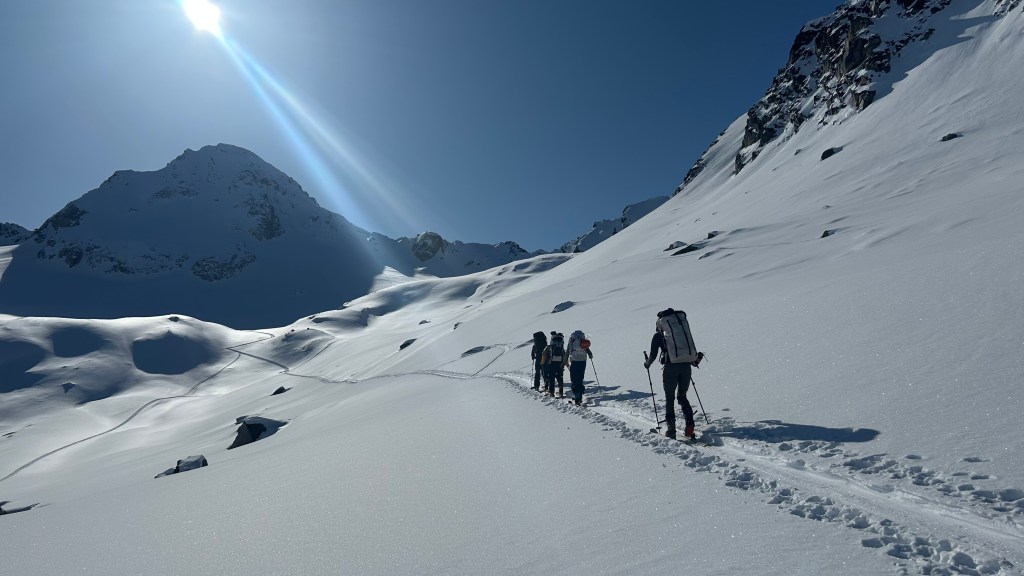
After a big breakfast, clear skies invited us up the Bomber Glacier. We set off towards the pass under the still unfamiliar intense sun that begins to show up in March in Alaska. The trivial lower glacier eventually led us to the headwall that Bomber Pass existed on. The last 50 feet to the pass was totally punched out due to the amount of traffic that uses the pass for access. Brian and Eric were troopers and found their way to the pass on their skis, but the other three of us were not quite as motivated to do the climb in clean style, so we took our skis off and booted the last bit, aware but uncaring that we were contributing to the deterioration of the pass for anyone behind us.
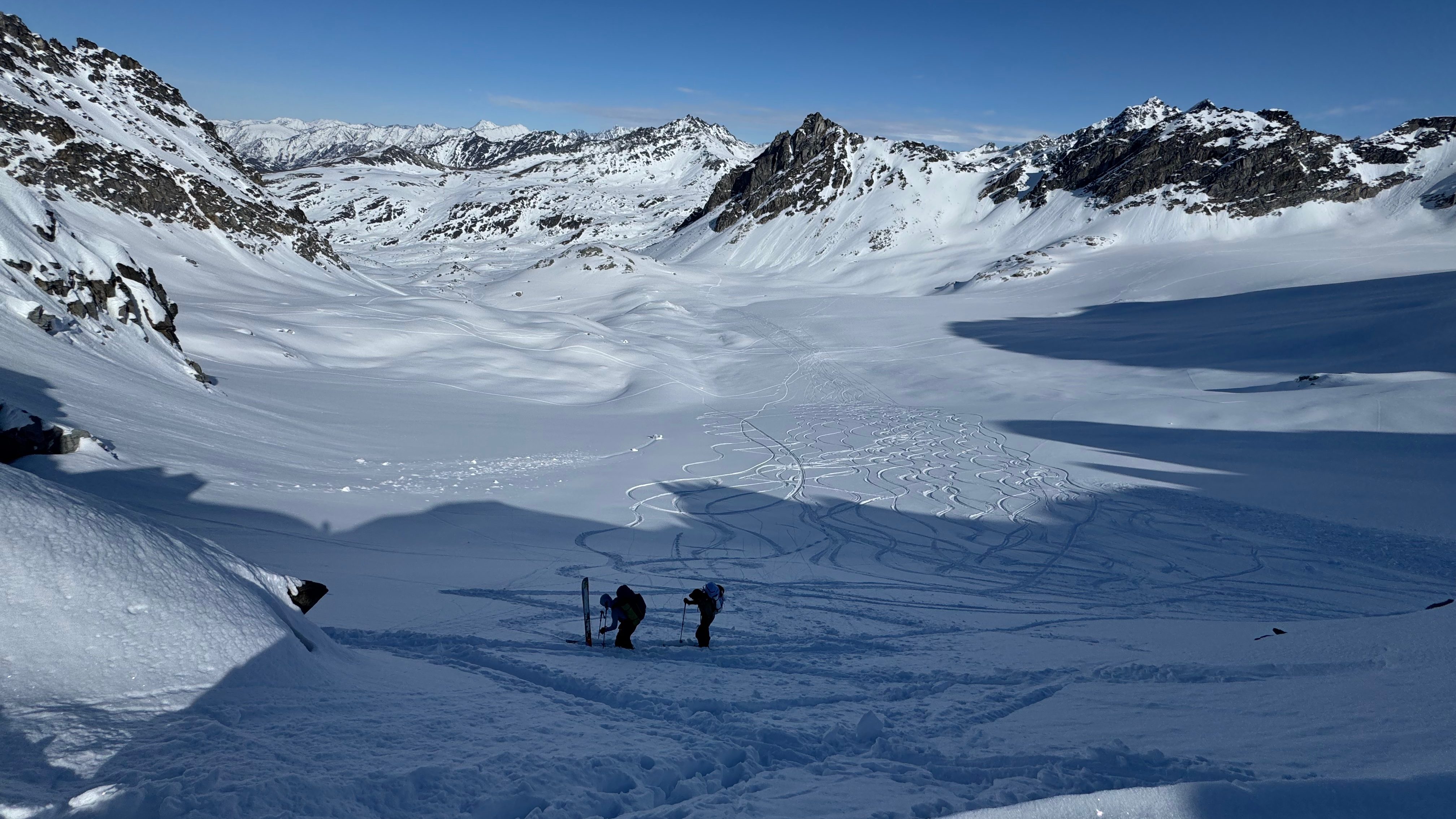
At the top of Bomber Pass, we took in the endless views and filled our energy tanks with snacks and water. The snow down to Reed Lakes was firm but edgeable with focus. After our break, we downclimbed the top of the pass until reaching a panel of snow that did not have objective fall hazards on it. From there, we put our skis on and used a combination of side slipping and jump turning to navigate the still-steep but easing slope. At one point, about halfway down to Upper Reed Lake, the aspect shifted just slightly, but it was enough to turn our hard-to-edge snow into perfect corn. From there on, we all began to link big GS turns and our fears of slipping turned into pure joy.
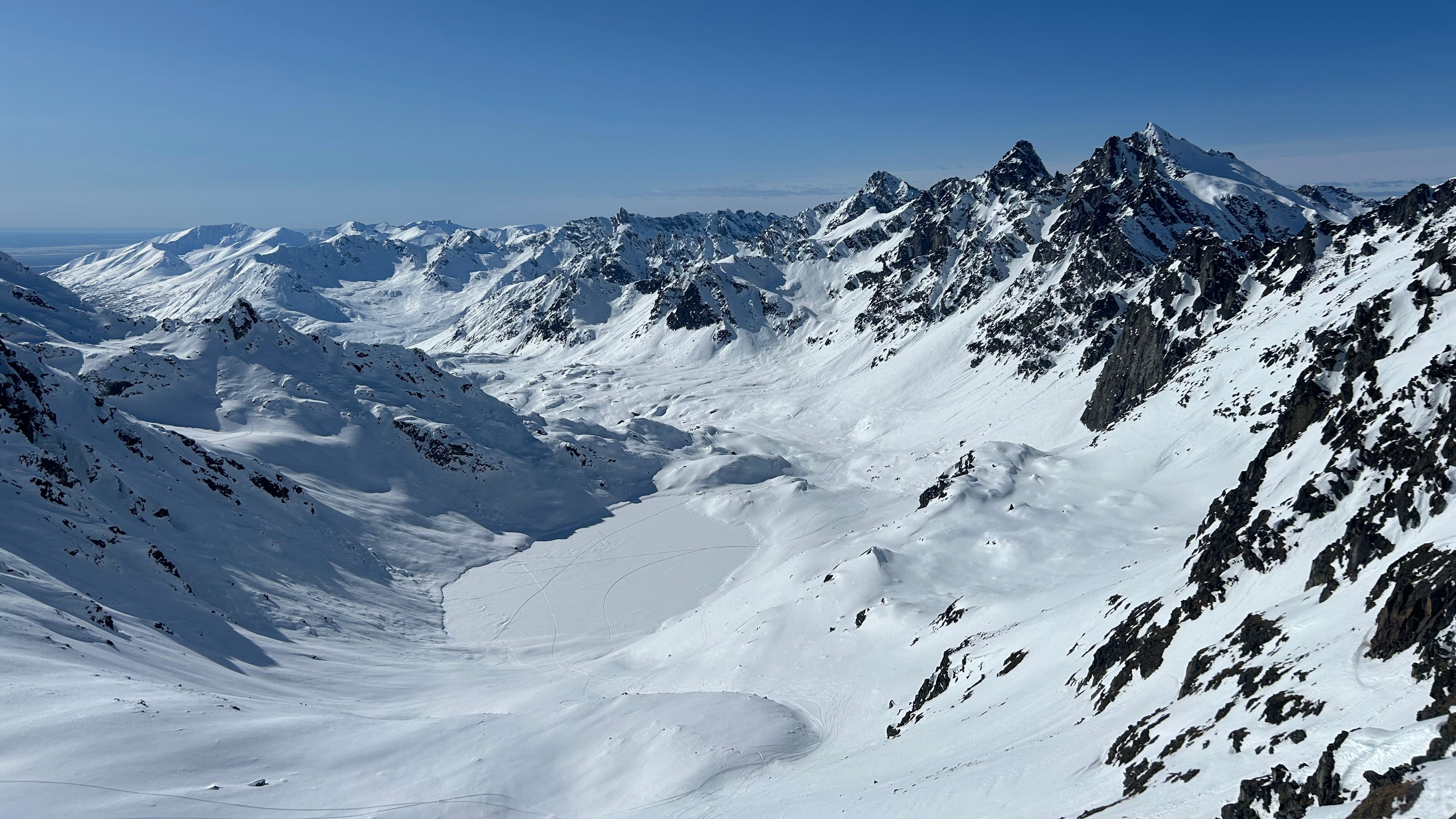
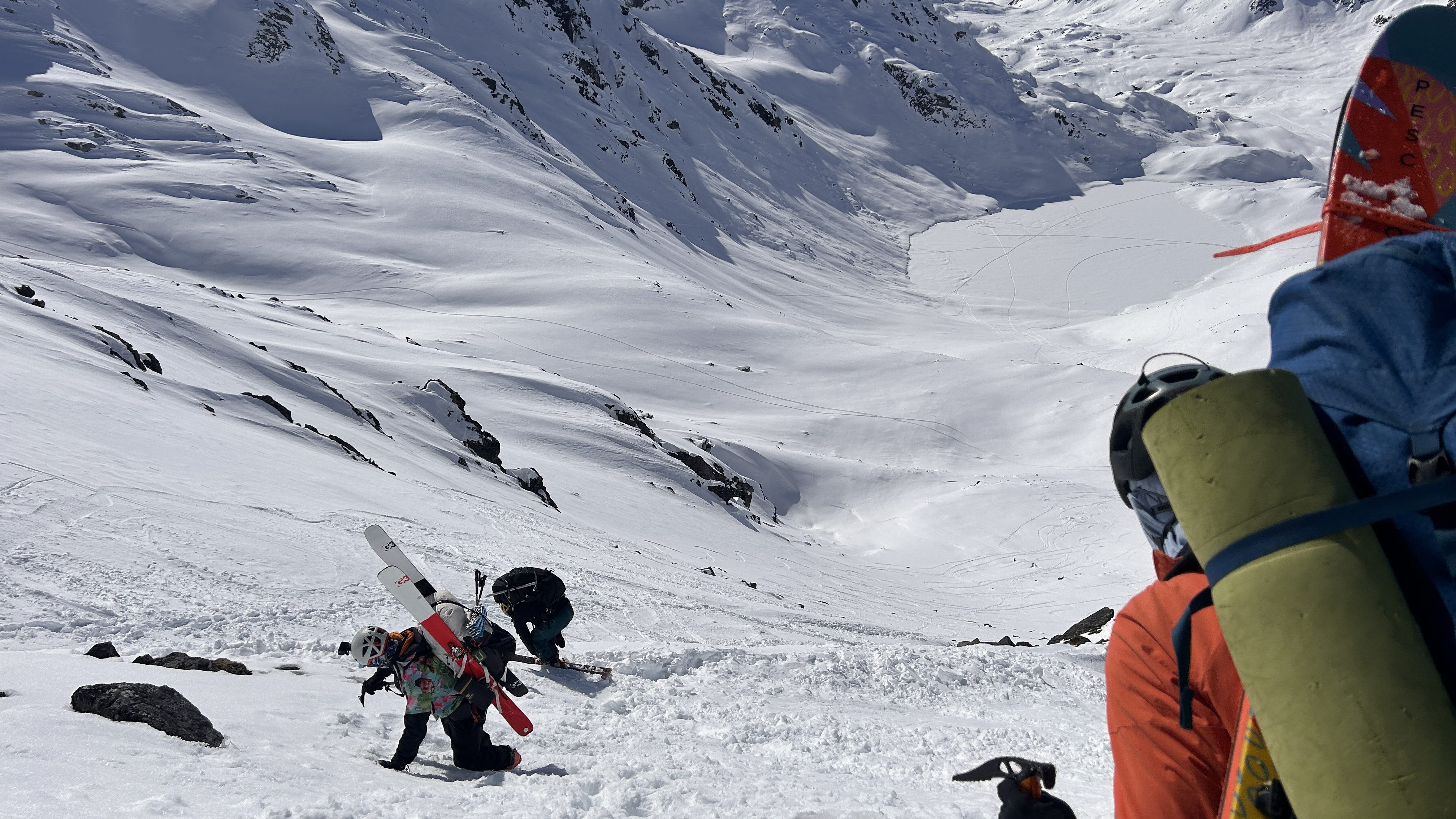
As we navigated our way down through the Reed Lakes, it was hard to stay traversing when the snow was so nice, but all of us agreed that our priority was a clean exit, making it paramount we retained whatever elevation we could. With Lang’s deep knowledge of the area, we were able to make it back to the groomed trail with minimal skating and poling, and from the groomer we were able to hold our speed much better. As we neared the parking lot, the effects of the Boulder Dash snowmachine race just a few days prior began to show. The slopes near the Mint Lot were fully packed down by the snowmachines, which ended up beneficial to us. We took the wide open backcountry groomer all the way back to the cars that were parked on the outskirts of the empty lot.
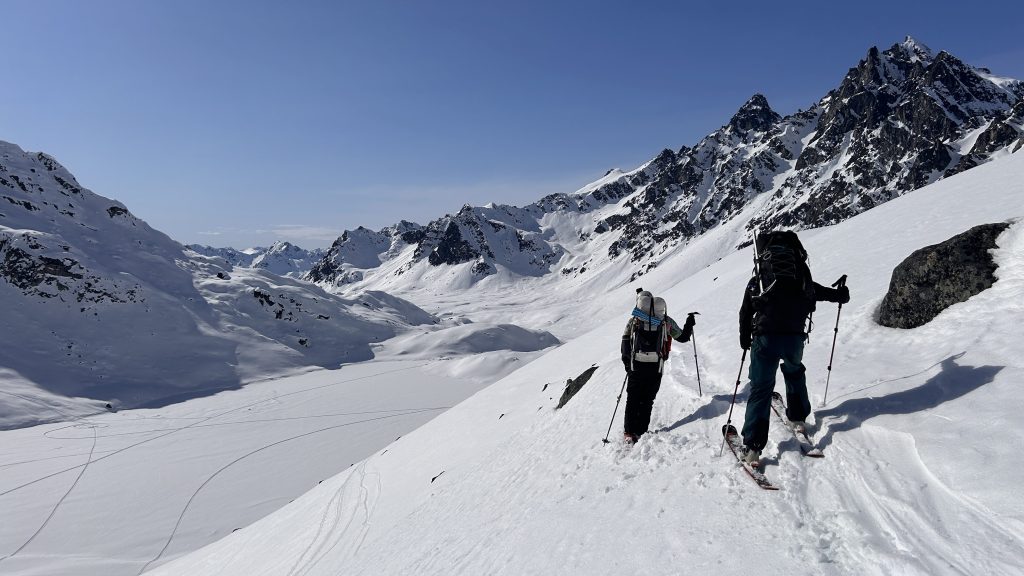
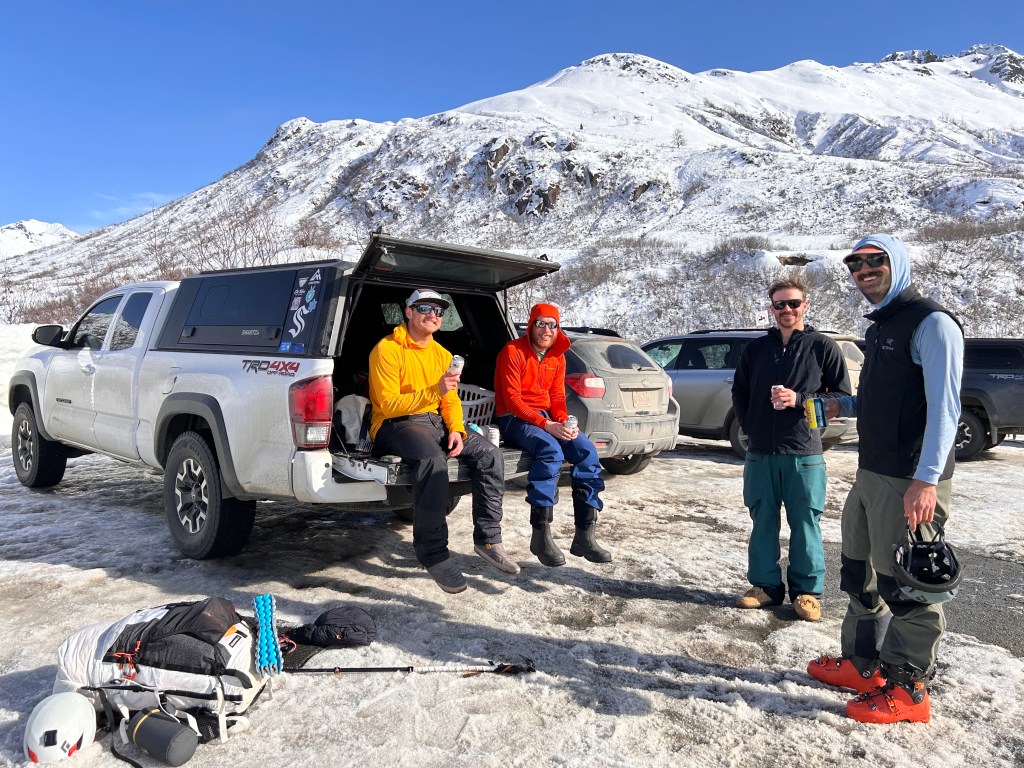
We took our time packing the cars and hanging out as none of us wanted our trip to end, but eventually it was time to head back to the real world. We exchanged numbers and planned our next trips, and soon enough were back in Anchorage where we could enjoy the perks of running hot water and climate-controlled housing. While I still have plenty of exploring to do within the Talkeetna hut system, I can see why the Bomber Traverse is such a classic within South-Central Alaska, and I am already looking forward to my next venture into the sea of granite that is the Talkeetnas.


Leave a Reply