Today, the small town of Hope survives as a reminder to the industry the Kenai Gold Rush brought to south central Alaska. Just outside of Hope used to live the town of Sunrise, at one point the most populous town in the state; however, now you would be hard pressed to know there was ever a town along the banks of Six Mile Creek. What you will find on Six Mile Creek however is a healthy culture of whitewater boaters looking to cut their teeth at some of the best road-side boating in the greater Anchorage area.
Six Mile has something for boaters of all ability levels and access to and from the water to allow people to choose their own adventure. There are two class II sections, a class III-IV canyon, a class IV canyon, and a class V canyon all accessible for most of the summer (occasionally even into the winter). Along with having a variety of whitewater, Six Mile also has a wide range of runnable flows with packrafters preferring lower flows and hard boaters preferring higher flows. Generally, us packrafters shoot for flows between 8.5 feet and 9.5 feet on the Sixmile Gauge because higher water could lead to a long and challenging swim in any of the canyons.
Above the First Canyon
A common put-in for Six Mile is the large pull-out on the north (east) side of the Seward Highway between the Johnson Pass trailhead and Hope turnoff. This put-in allows for a few miles of class 2 water to warm up before reaching the first canyon. While some may prefer to jump straight into the canyon, the scenery on this stretch makes it worthwhile as you pass through both wide open mountain views and walled in shallow canyon walls; there are also ample waves and features that allow for ample play opportunities for boaters of all abilities.
First Canyon (III+)
While the first canyon is marked by an obvious horizon line created by the first rapid 17th Ender (III+/IV), the best scouting opportunity presents itself before the rapid comes into view. Plan on exiting your boats at a large beach before making the left turn that Gulch Creek comes in at. From here there is a social trail heading uphill then downstream to get eyes on both 17th Ender and the second rapid, Predator (III/IV-). While we call them two separate rapids, it is normal that the two are run in tandem as catching any eddy between the two would be very challenging.
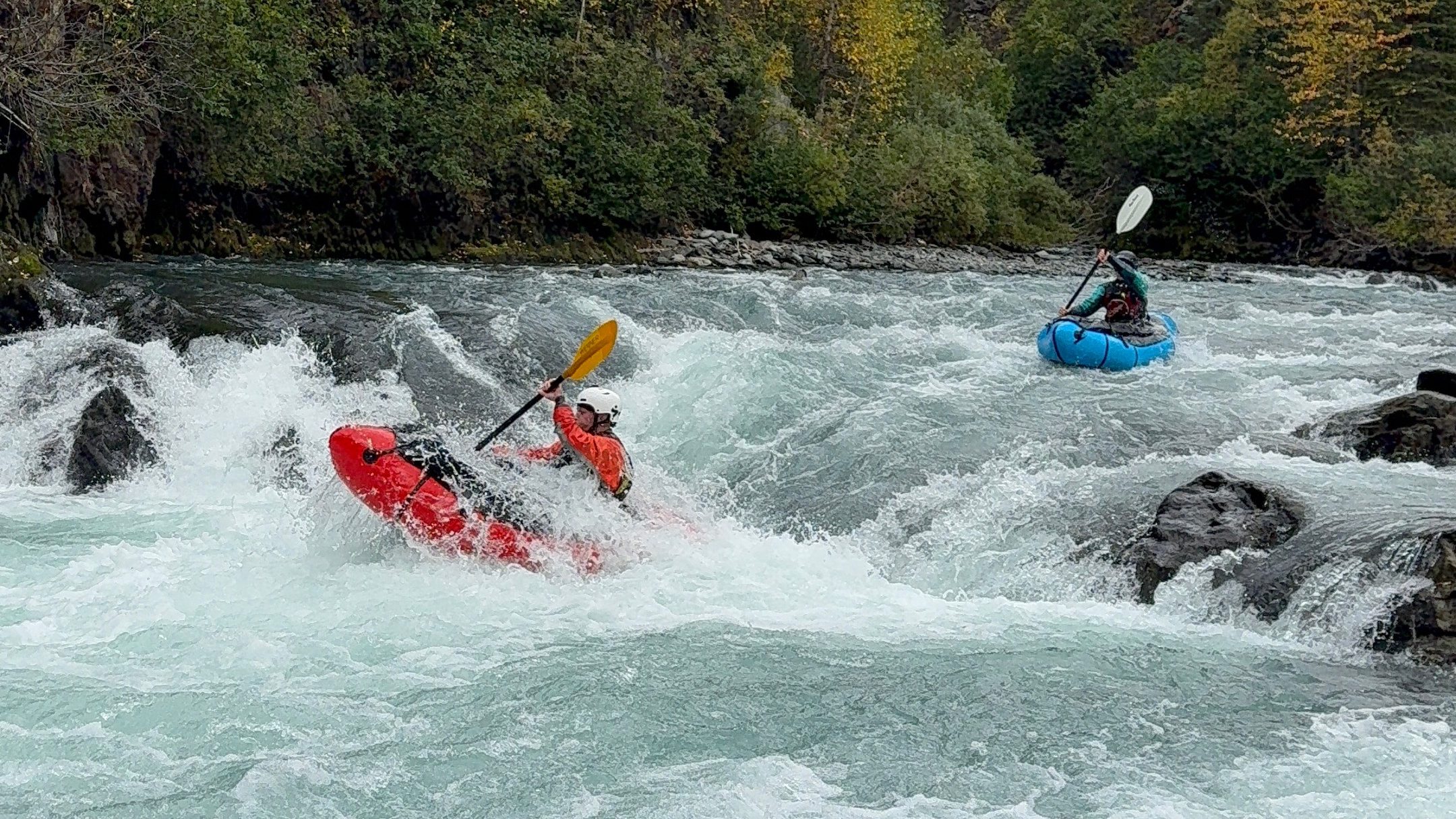
17th Ender is a river-wide ledge that allows for multiple lines depending on the levels. At low flows, the only option might be the obvious center line, but as flows increase this line is not recommended as the rooster tail at the bottom of the tongue will eat a packraft. As the center becomes a worse option, lines on the left and right both open up and allow for a more predictable ride; typically the left line serves as the sneak line. After the main drop of 17th Ender and at low to medium flows, a hole can form center-left before you head into the constriction that is Predator. Predator is the narrows underneath the famous bridge over the first canyon, and while it tends to be a straightforward rapid, coming off of 17th Ender clean is paramount to success. Much of the water throughout Predator wants to push you into the right wall, so I recommend paddling right to left to right from the bottom of 17th Ender. First, you want to be right of the hole beneath 17th Ender, then you want to work left as you enter the canyon to avoid the wall before paddling right to stay in the waves as you exit the constriction. Beneath Predator is a very big eddy on river left, be sure to catch this and group up before the next rapid, Waterfall (III/IV-).
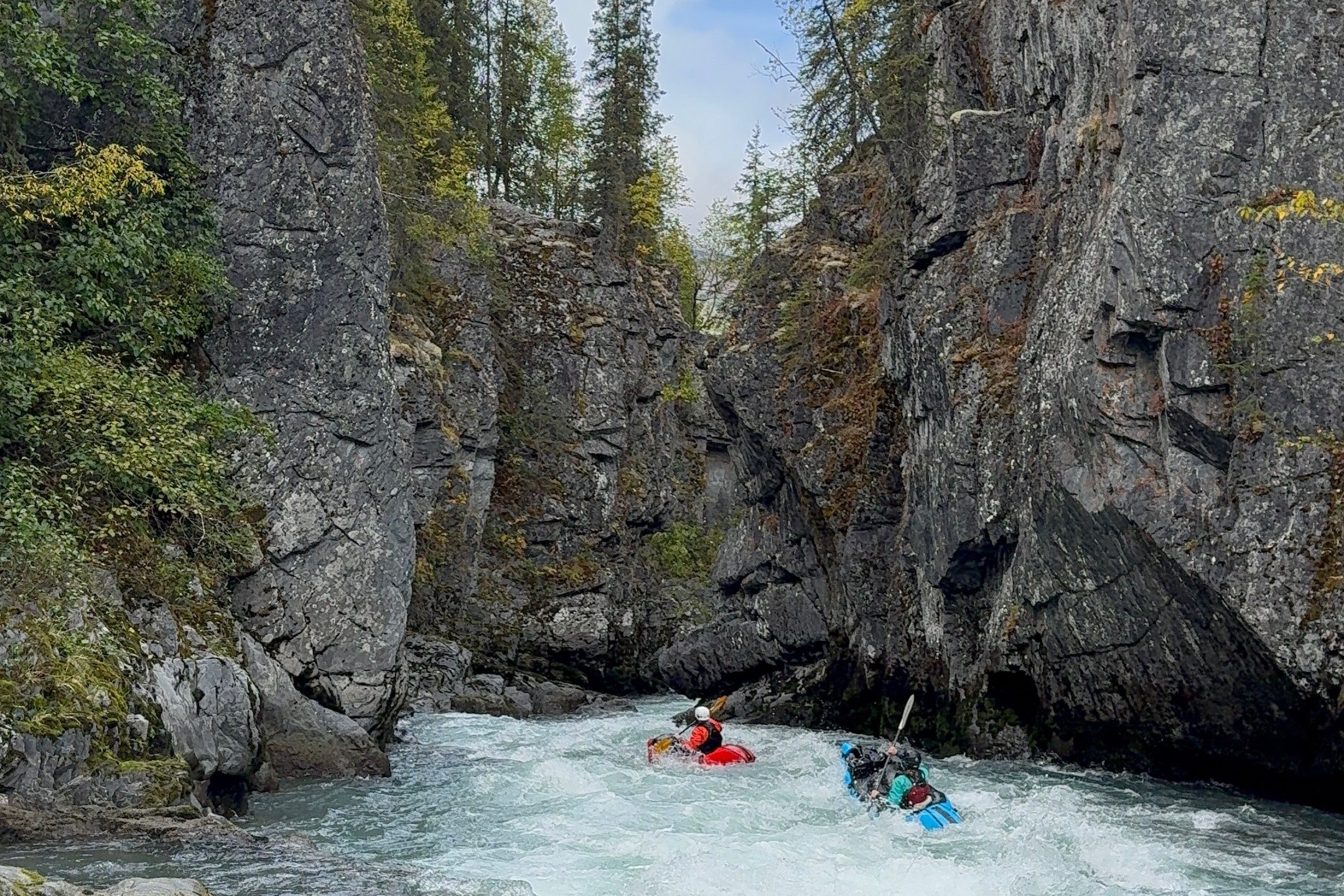
Waterfall is another river-wide ledge, however this one presents a weakness on the left side of the drop. Because of this and the ability to see it as you enter the rapid, many paddlers follow the slide down the left side of the drop. While this line is straightforward, there are shallow rocks and confused currents on this side, threatening a flip. This is also the line where the near-miss during the 2017 Sixmile Bluegrass and Whitewater Fest took place, exposing the fact that wood and other debris should always be a consideration even on a well-traveled river. There exists clean boofs on the right side of Waterfall at most levels, and multiple eddies exists underneath the rapid on the right.
The next rapid in the lineup is The Notch (III) which is a straightforward drop with a steep entrance leading into a tight slot. This rapid is fun and scenic, but the water does most of the work for you, just stay upright and you’ll succeed. A large eddy exists beneath this rapid on the left.
Finally, the first canyon ends with Screaming Right Turn (III/III+), another straightforward rapid. Stay within the current and prepare for a small drop to end the rapid as you make your way around a walled-in right handed turn.
Between First and Second Canyons (II+)
The stretch of water between the first and second canyons presents another great opportunity for the beginner paddler to join along for some class II fun. There are plenty of notable play waves and features within this stretch, but there are a few class III features at high water. This entire section can be treated as read-and-run, but keep your eyes peeled for good opportunities to surf as plenty exist throughout this stretch. There is one longer rapid that could be regarded as class III given its length, but it is rather straightforward. After plenty of boogie water, it can be easy to forget you are approaching a class IV canyon section. Keep your eyes open for the large avalanche gully and clear hillside on the right as this will serve as your marker for Boston Bar, the common take-out for this section. Boston Bar will be on river left across from the aforementioned avalanche gully; another way to identify it is by knowing if you enter a set of rapids after a left turn leading into a right turn, you are there. While these rapids appear fun and do provide many surf opportunities, do know a swim here requires a quick and decisive reentry as the second canyon lies directly below you. I recommend avoiding playing in these waves for this reason.
Second Canyon (IV)
While the second canyon of Six Mile is significantly shorter than the first, it makes up for it with its challenging and stacked whitewater. Each rapid on the second canyon gives you a different challenge from punching holes, riding steep drops, and avoiding canyon walls. The canyon begins directly beneath Boston Bar, and starts off with a drop called The Pearly Gates (IV-/IV). Pearly Gates is a river wide 5 foot ledge with a clean tongue on the left followed by a smaller drop with a tongue down the center. At higher flows, these drops can look more turbulent; trust the left tongue on the first drop and get to paddling to punch any hole at the base of the second drop. Just beneath Pearly Gates is a large eddy on the left, be sure to catch this in anticipation for The Nozzle (IV/IV+). The Nozzle begins with two river-wide ledge drops that tend to have a clean tongue; however at higher water you may need to plan for a boof stroke to clear any holes on the backside. After navigating the ledge-drops, you are thrown into a steep and chaotic set of waves and holes. My best advice is to be ready to brace and enjoy the ride because before you know it you’ll be barrelling through a tight slot that gives the rapid its name. Be ready to paddle to make it through the slot as there are some pin rocks right above the Nozzle. As you exit the rapid, micro eddies exist in the canyon walls and become bigger and easier to catch as you move further from the rapid. There is one more small drop with much of the water pushing you left into a short bedrock wall before reaching the next rapid. The Anvil (IV/IV+) is formed as the walls close in and force the water to increase in velocity. The proximity of the walls gives this rapid a bigger water feel than the rest of the run so far; confusing pillows appear and disappear on both walls, indicating the undercut nature of the canyon. Enter the rapid center and be ready for some chaotic waves before the river tries its best to slam you into the left wall. After avoiding collision on the left wall, be ready for the water to begin pushing into the right wall. If you manage to avoid both walls, you’re treated to a spacious eddy where you can help recover the gear of those who did not fare as well. Swimming this rapid could be scary given the bruise factor of the walls and the dangers the undercuts introduce; if you do choose to swim it, keep those feet up to help redirect any collisions. After the Anvil, there exists one more drop before the canyon lets up. Beaver Drop (III) is the final rapid in the second canyon, and if you’ve made it this far you should be able to make it through this drop. A clean tongue tends to exist near center on this drop, and after running it be sure to catch the eddy directly underneath it on the right as the wave functions as an amazing surfer for those brave enough to embrace it. Directly beneath Beaver Drop is a large eddy called Banjo’s Hole where you may see people fishing during salmon season; this serves as your takeout for the second canyon. If you felt at your limit on the second canyon, now is your time to get out as the third canyon is only harder.
Third Canyon
I have not boated this canyon so I will not speak on it. It is commonly agreed to be a class IV/V run with consistent rapids like Staircase (IV+), Suckerhole (IV), Zigzag (IV-), Merry-go-round (IV), Jaws (IV), and Junkyard Dog (IV). Read Jule’s report for more information on this portion of Six Mile Creek.
8/23/25
9.3ft (Sixmile Creek near Hope)
Lang invited me out to paddle Six Mile with a large group, something I’ll never say no to. The group included 8 packrafters and 2 kayakers who both knew the run very well. The hard boaters acted as the leads and helped clean up any mess us packrafters made. The entire first canyon went very well as did the second canyon until I swam the very last bit of Anvil. I got pushed into the final right wall and saw a knife-sharp rock ready to push into my boat so instead of leaning into the wall, I embraced the flip and was quickly back into my boat. Lesson learned, anticipate the right wall by setting up a hair further left. No need to avoid that initial left wall so passionately.
9/7/25
9.15ft (Sixmile Creek near Hope)
To celebrate both Kelli and my birthdays, we filled a weekend full of paddling. Jake, Olga, Kelli, and I headed down to Six Mile after paddling the South Fork of the Eagle River the day before. We ran from the commercial put-in to Boston Bar. Everyone made it through 17th Ender and Predator clean, but one member swimming on Waterfall inspired us to hike it for a second lap so they could follow me down the right, boof line. Getting down to the eddy above Waterfall proved challenging, and it seems like in the future the best way to do it is to hike back up to the scout on 17th Ender given the effort to make it down to the river.
 Kip Sprout
Leave a comment