8/3/25
After a lackluster July ski due to an unexpected wisdom tooth removal, I was eager to ski something more adventurous come August. I had my eyes set on the Girdwood, Portage, or Seward glaciers but found pessimistic forecasts for the early portion of August. Without real hopes of skiing, I spent Friday night planning for a weekend of packrafting, and scored a fun lap on Glacier Creek Saturday. When I got home on Saturday, the forecast for Sunday remained ugly, but my packed ski bag was ready to find snow whenever the skies cleared.
With no big plans on Sunday, I slept in. Expecting another day of rain, I was amazed when I awoke to sunlight sneaking through the cracks in my blinds. As my adenosine receptors slowly filled with caffeine, I began to realize my opportunity to ski had arrived. In an unusual turn of events, Portage was showing perfectly blue skies for the entire day while Girdwood had scattered coverage and Seward was set to rain. Being mid-summer in Alaska, my 11am departure time from Anchorage was no worry as the sunlight still felt infinite.
Unsure of if I would be skiing Byron Peak or Middle Glacier, I drove to the end of the road and got eyes on both. While I could not see much of Middle Glacier, a combination of fewer cars in the parking lot and a less known trail drove me away from Byron Peak. I strapped my skis on my back, ignored the confused faces looking my way, and began finding my way down the unmarked trails to the Middle Glacier stream. Emerging from the brush and into the steep-walled, glacially carved valley proved stunning. There were still patches of snow down low, deposited by avalanches large enough to rip out bushes and trees that were finally seeing sunlight for the first time since they got scoured off the cliffside.
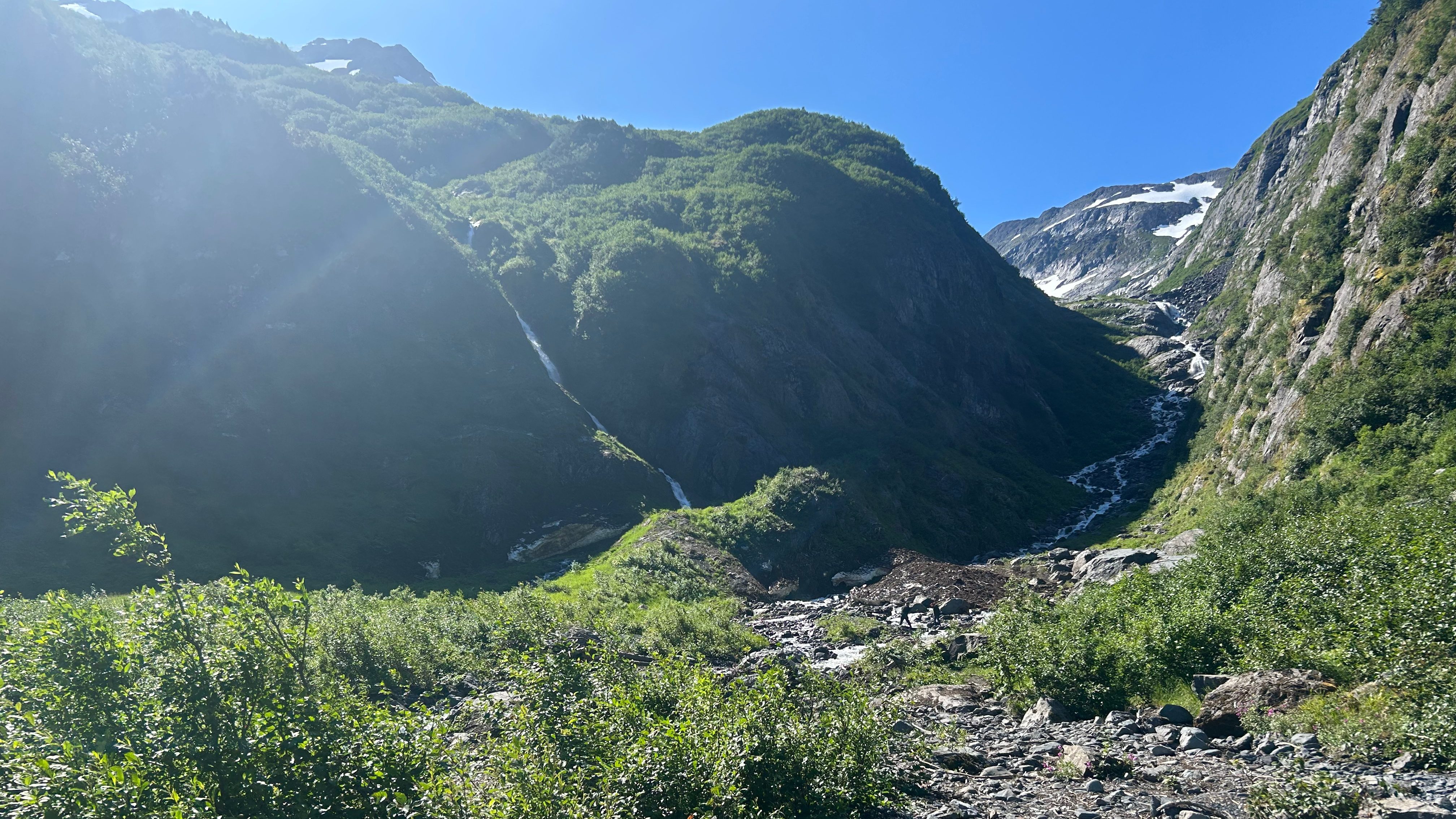
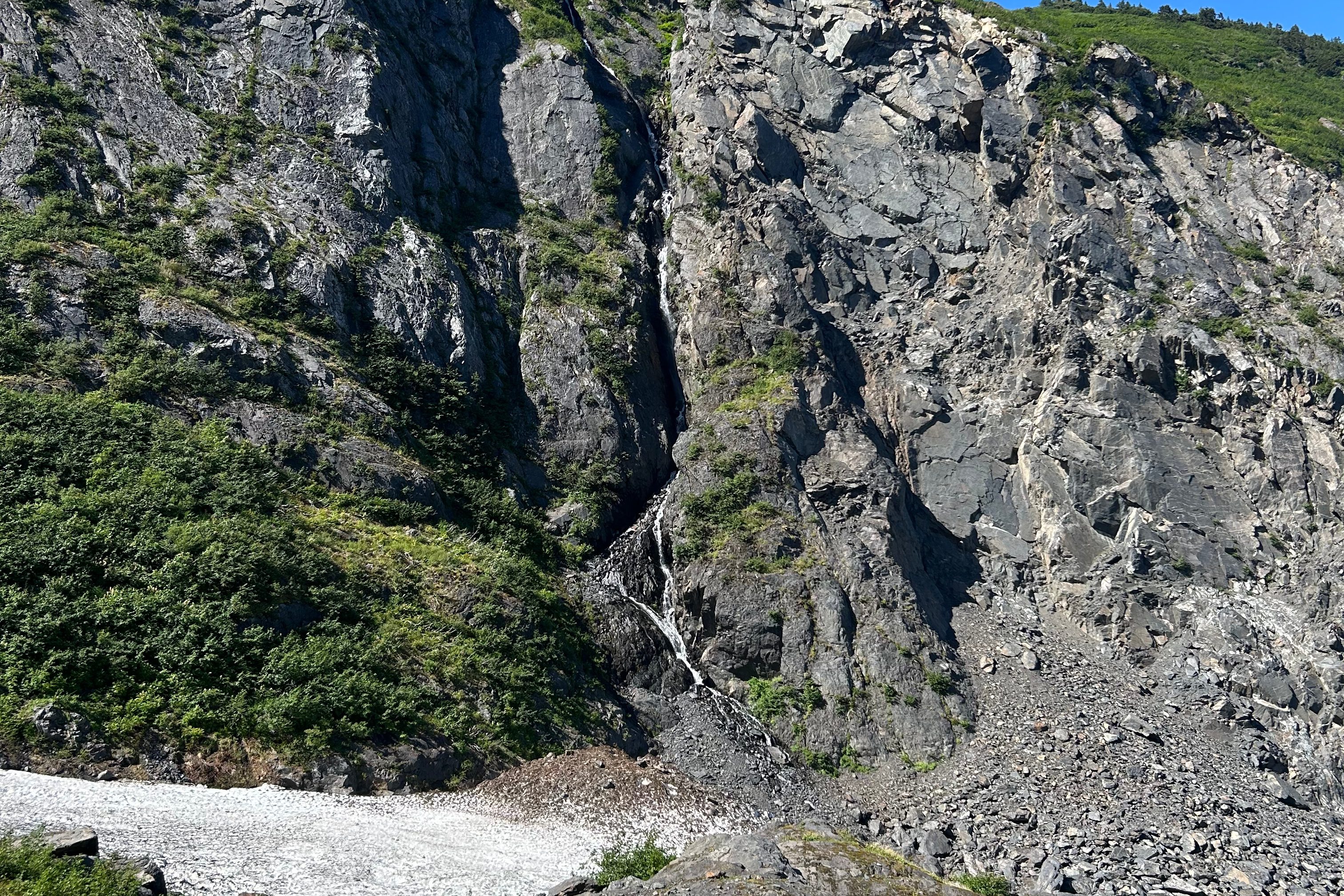
I followed the stream up its steep path towards the glacier that was providing the water I was following. Movement was trivial to begin, but I soon found a waterfall that stood around 40 feet tall. I soon identified a route up the side of it that avoided much of the exposure, and as I crested over the edge of the waterfall I saw a second, larger waterfall above me. The second waterfall proved much more challenging to surmount. I first tried climbing the steep slope to the right of the waterfall, but found the shallow dirt over polished greywacke to be too uncertain to permit travel. I backed off and searched for another option. There was a large chockstone that was restricting my access to a manageable slope, and it had a small gap that caught my eye. I carefully waded up the river, sure to not top my waterproof boots, and began seeing how much of my gear could fit through the gap. I managed to get all of my gear through the tight constriction, and began trying to fit myself through the gap. It soon became clear that my shoulders weren’t going to fit through the gap, so I shamefully navigated my bag, skis, and poles back through the gap. I took a break at this point unsure of what to do next, but I had an idea what my last option was going to be.
After mustering up the energy and mental fortitude, I took off my only pair of socks and slipped back into my climbing boots. As I was taking my break, I found the widest section of the river, a telltale sign that it will be shallow. Knowing a waterfall lies not 15 feet downstream meant there was no room for error in the crossing. I donned my pack, readied my poles, and carefully made my way across the stream one step at a time. While I was flooded with relief in passing over the stream, I soon realized I was now committed to crossing it again on the way down, with the potential for more water rushing down the valley due to the diurnal nature of glacial streams. I continued past the stream in wet boots and no socks as I gained elevation. Every step held less vegetation than the last, until I found myself on the same polished greywacke that was buried underneath dirt just a few hundred feet below.
As the rock transitioned into permanent snow, I ditched my wet shoes and gave my feet a moment to air-dry before slipping into my socks and ski boots. At this point I had climbed about 1,000 feet, and using satellite imagery as a reference, I figured I could climb another 1,000 feet on snow before running into big cracks on the glacier. Being alone, I determined it would be irresponsible to recreate around any crevasses, and I deemed the sign of any cracks to be my turn-around point. The firm summer snow meant easy booting, and I was making strong progress before running into multiple dry steps that took a little more thinking. I don’t think a slip on the dry steps would have been devastating, but it would’ve put me in a shallow moat with a river of water flowing between the snow and the rock and made for a very wet walk back to the car.
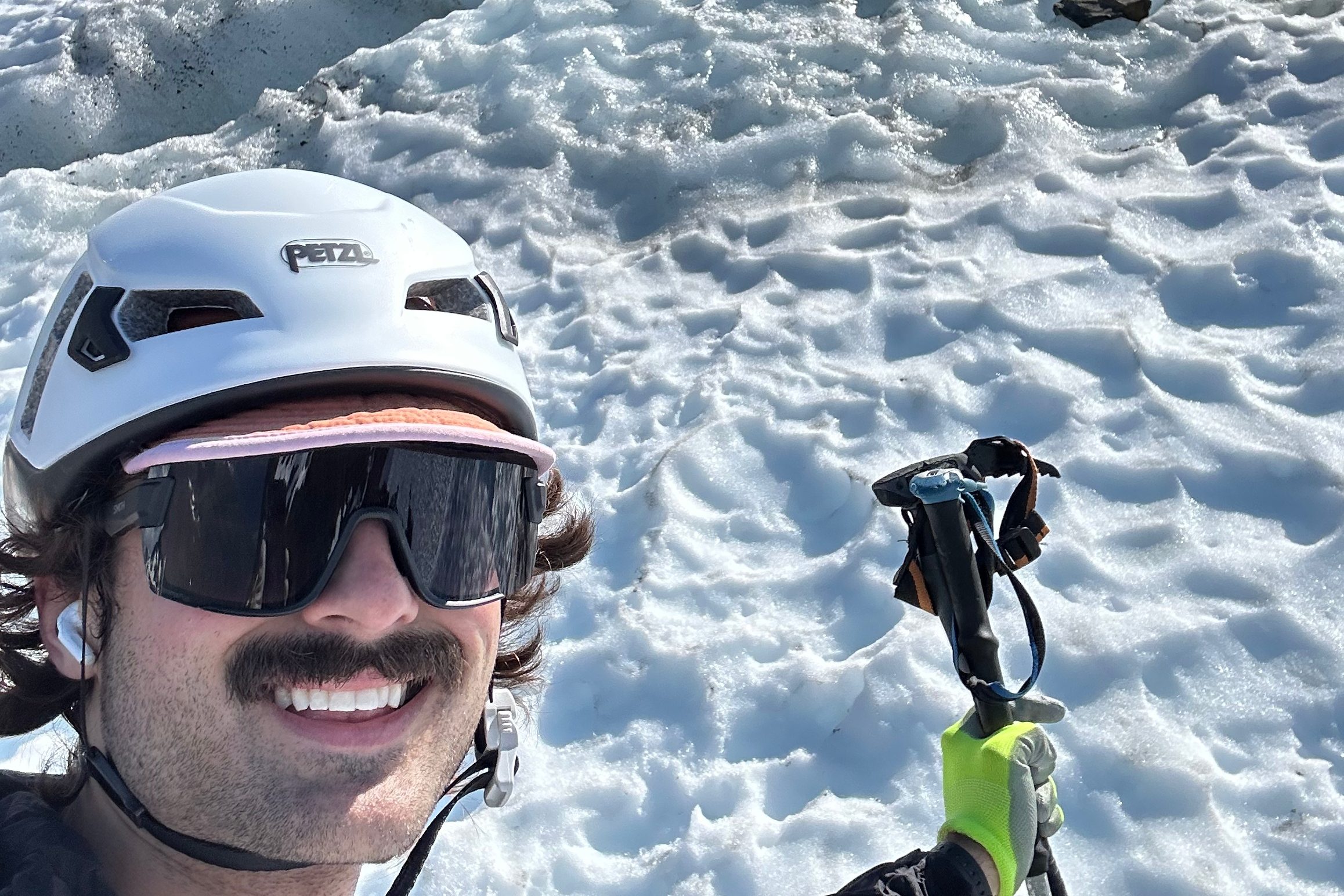
After navigating the dry steps, I found myself standing on the edge of blue ice and crevasses, the perfect place to transition onto my skis and enjoy my descent. I took my time transitioning, sure to enjoy the clear skies that rarely grace the Portage arena. The upper pitch had a double fall line, something I don’t enjoy too much on my skis, but the fact that the snow was moving made up for it. I made my way over a steep roll where I was then on a long panel of fall line skiing, until I reached a break in the snow. I carefully took my skis off and did my best to find traction on the slick rock. I biffed my last step and fell face-first onto the snow beneath the exposed rock. In the fall, I dropped both of my skis; one landed nearby in the shallow moat filled with rushing water, and the other landed base-down and began to slide down the slope without me before miraculously hitting a suncup and flipping over. The bindings provided enough traction for the ski to stop not 15 feet beneath me. I was glad there was nobody around to see this blunder, but here I am writing about it still.
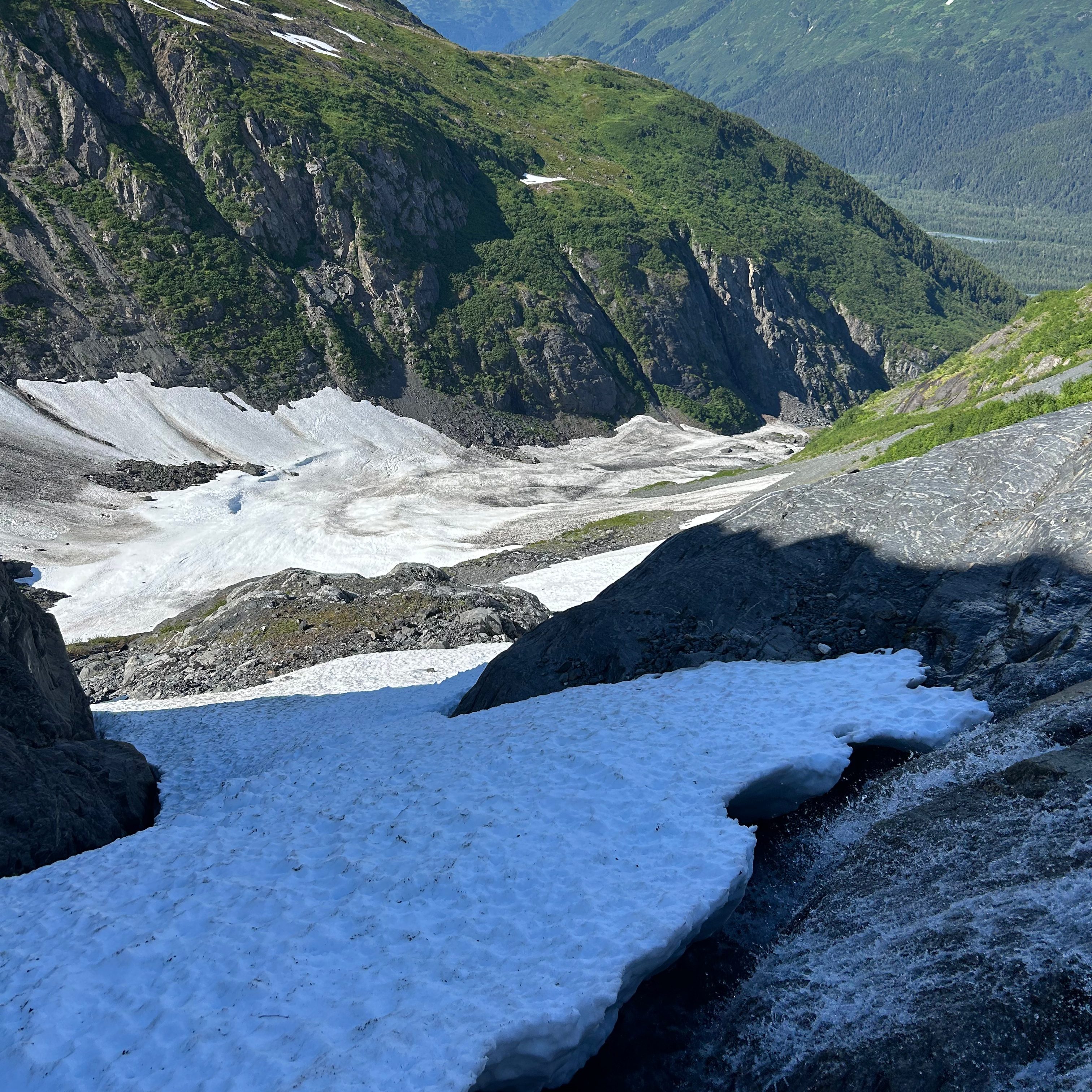
After recollecting my gear (and pride) I prepared to ski the second pitch of consistent snow. I enjoyed 35+ degree snow and was able to avoid firm runnels enough to put a smile on my face before taking the skis off to pass another dry step. This time, I had the pleasure of walking on scree and choss instead of the greywacke that felt more like a banana peel. After passing this dry step, I could see my shoes in the distance. Between me and them was nothing but snow; however, that snow varied in quality. Some parts of the final pitch were delightful type 1 fun, and other sections were laden with rocks, pollen, and other contaminants on top of the snow. Regardless, I found my way to my shoes through the surface layer of rocks.
I debated switching into my shoes for the entirety of the hike back to the car, but decided to wear my ski boots down to the stream crossing to keep my feet as dry as I could for as long as I could. The well-worn vibram soles on my ski boots provided little traction on the polished sandstone, leading to a meticulous descent involving more bushwhacking and alder belays than the ascent provided. Eventually, I was back at the stream crossing where I switched shoes and tried my best to not think about the waterfall looming behind me as I crossed the creek.
The rest of the descent was straightforward and painless, and before I knew it I was digging my keys out of my bag. As I drove away from Portage, I took the opportunity that the blue skies presented to look at some of the lines that have evaded me thus far including Byron and Explorer Peaks, and the summer glaciers only made me more confident in my ability to achieve both objects when the window presents itself.
 Kip Sprout
Leave a comment