10/15/23
Wrangell-St Elias National Park is a summertime tourist hub; however, come fall the place clears out and only a handful of full-time residents remain. At the end of the guide season, I chose to stay in McCarthy to help a friend erect a house, and this opened up the opportunity to easily climb ice on the Nebesna Road. The Nebesna Road climbs provide some of the earliest accessible ice in the state, typically coming in throughout early October. With this knowledge, three of us who were working on the house cleared out a long weekend to go get a shot at some of the ice. Another friend in Anchorage was interested in the climb and committed to driving out to meet us.
The most obvious route to us was Spring Fling. This flow is arguably the easiest in the area while still providing a full day on route. The climb is given the rating of WI3-4 according to alaskaiceclimbing.com. WI4 is above my pay grade, but from what we could gather there was only one pitch of it on the route. Fortunately, one of the members of our group identifies as an ice climber and not a skier like the rest of us, and he was happy to get our rope up through the crux pitch.
We drove most of the Nebesna Road to the climb the day before and stayed in Viking Lodge Cabin for the night. The cabin was one of the nicest I have been to, and the fact that it is only a few hundred feet off of the road made it even more appealing to our mission. After an early breakfast, we loaded into the car and drove the last few miles to the climb.

From our parking spot, we walked a mile or two and were soon at the base of the ice. From here, it was obvious that the first pitch was closer to a WI4 than a 3. We pulled the gear from our bags and began racking our kits. We split into two rope teams with myself on the first. I was partnered with the strongest climber in the group, which made my life easy. I planned on giving him most of the pitches, but I was motivated to take the lead on at least a pitch.
Before I knew it, I was belaying my partner up the crux pitch that began the climb. He took his time carefully navigating brittle morning ice. After some time, he had topped out and was ready to bring me up. Within my first couple swings, I realized how hard this pitch must have been on lead. It was consistent, brittle, and ended with a challenging steep section. I reached the top and gave my partner compliments on his lead. Instead of having the party behind lead the pitch, I brought their rope up with me and belayed the first of the two up. Once I had their first up, my partner and I walked up the gully to find the next bit of ice.
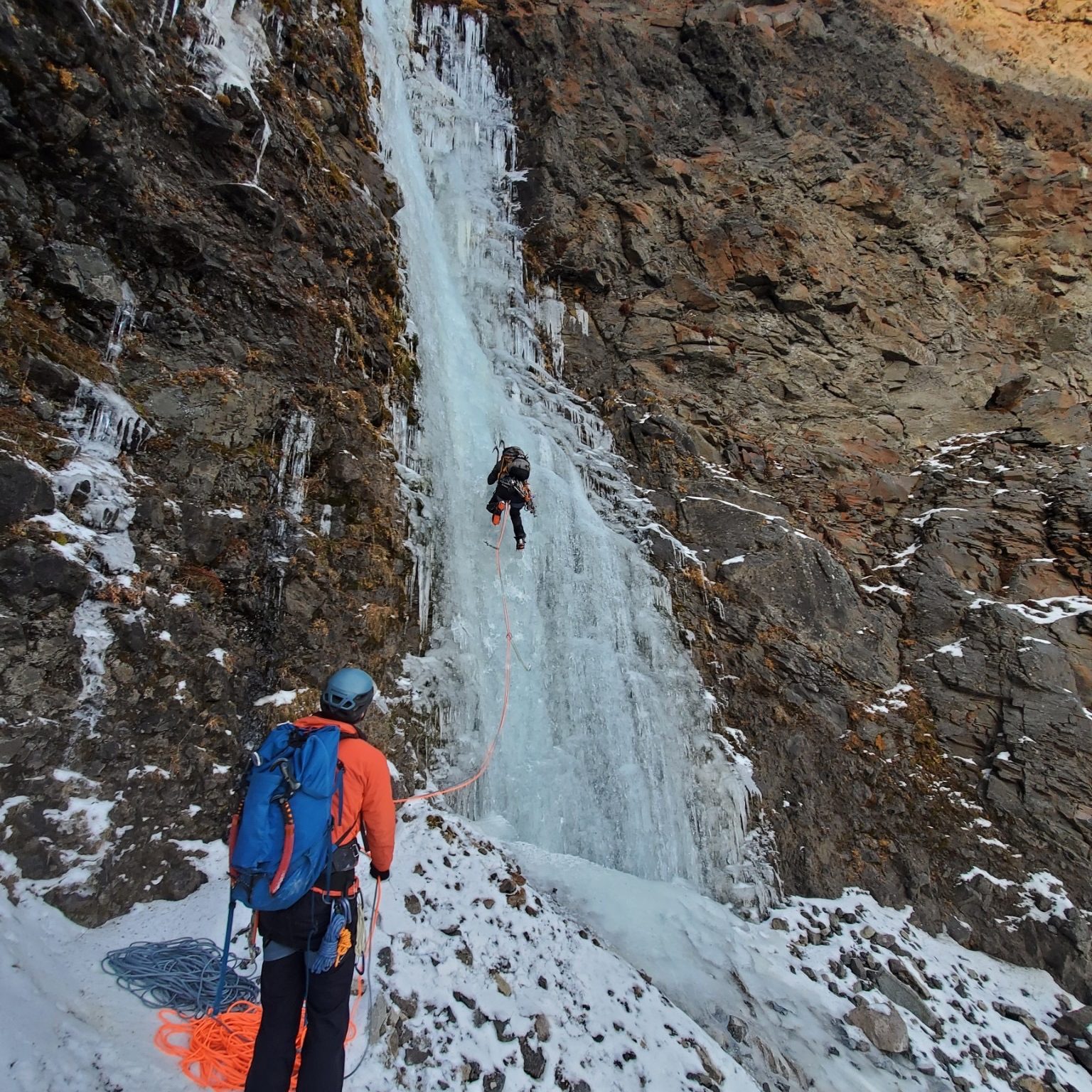
What we found ahead of us was a delectable pitch of WI3 that topped out over a chockstone with a few meters of mixed moves. My partner took the pitch, and made quick work of the ice. Once he reached the chockstone, he made a series of mixed moves and upon reaching the top he let his excitement show. I followed, and realized the smile on my face growing larger through each of the mixed moves. The chockstone delivered some of the best movement on the entire route.
A few more pitches of straightforward WI3 stood between us and the top of the route, but within those pitches were sections of vertical chandeliered ice. We swapped leads for a pitch, and eventually found ourselves looking at a pinch in the gully that matched the description of the top of the route. My partner started out and made fast progress before reaching an unprotectable step. He kept his cool and climbed the pillar; at the top of the pillar he was met with low-angle, calf-burning ice for longer than was comfortable. Once the 70m rope was stretched, he built an anchor and brought me up. From his anchor, there were only a few more feet of ice to climb before the flow petered out. The second rope team made their way up, and soon we were planning our descent.
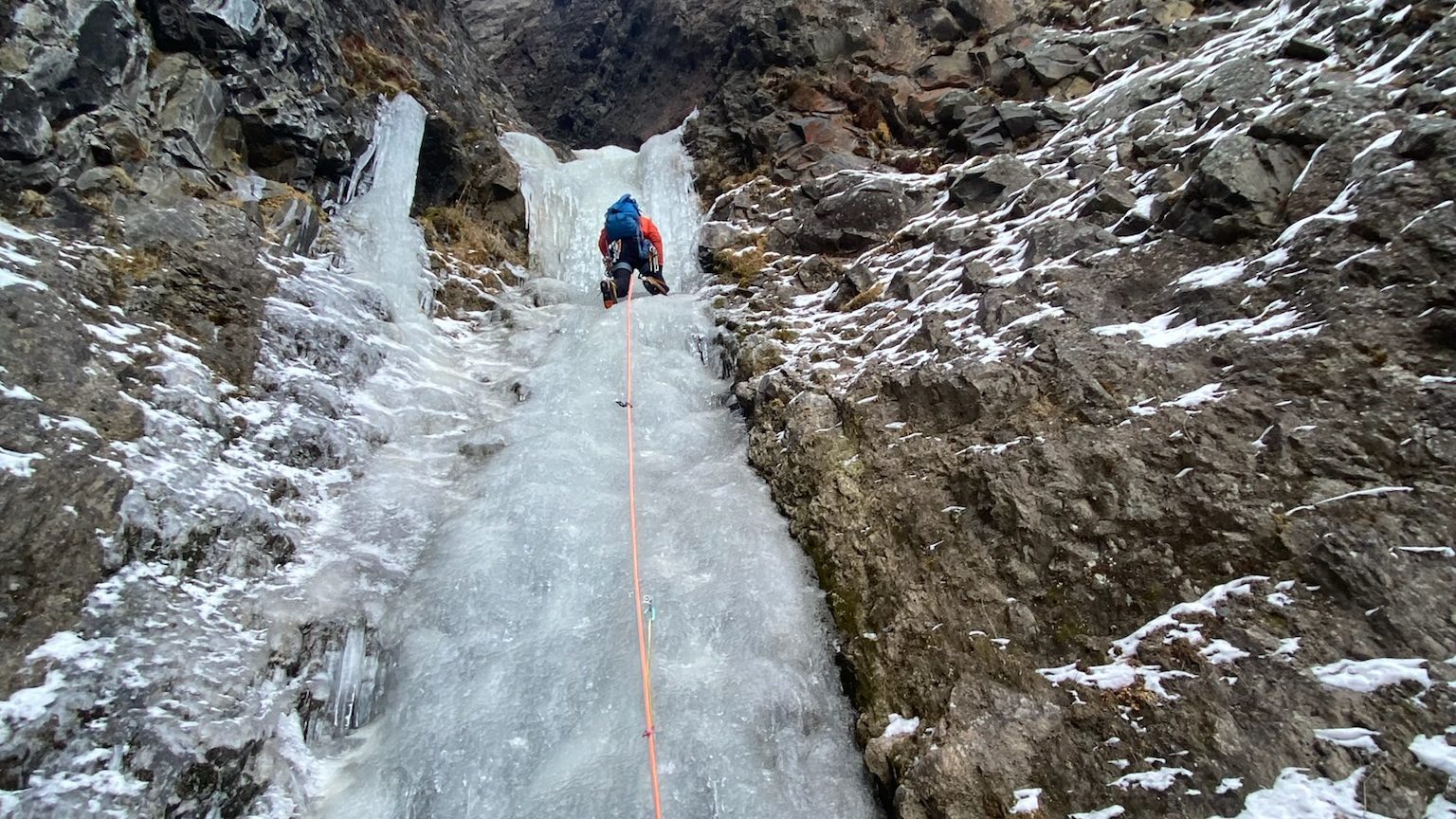
To rappel the route seemed complex and time-consuming, so we elected to walk off the side of the climb. We continued up a gully that veered lookers left, and then began side hilling to lookers right. After a bit of traversing, the slope began to become shallower and we started our jaunt down to the tundra beneath us. Quickly, we were at the base of the climb and continued to the car. After 1300 feet of climbing and descending, we found ourselves back at the car nine hours after leaving in the morning.
All photos were provided by Landon Nurge and Cody Simmons.
 Kip Sprout
Leave a comment