6/29-6/30
In the summer of 2023, I picked up packrafting as a way to open up new opportunities within Wrangell-St Elias NP. The crew at St Elias Alpine Guides has a history of packrafting, and working at the company provides the opportunity to tap the resources and experience of the generations of knowledgeable boaters that have come before. As I got into packrafting, my home water quickly became McCarthy Creek. The incredible consistent creek run ended right on our property, making it an easy option after work. Throughout my first summer in McCarthy, I took in all the information I could and continued studying the sport as the river began to freeze and my focus shifted from boating to skiing.
During the swift transition that is fall in Alaska, a friend exposed me to pictures of the McCarthy Creek Glacier. I immediately became infatuated with the thought of running McCarthy Creek from the glacier. To run the water from the true headwaters would provide a complete experience that cannot be replicated by putting in at an arbitrary location defined by ease of access.
Throughout the winter, I often tossed the idea to other boaters within the company, and everyone seemed interested in the idea. When the idea was mentioned around Cody, who had initially shown me pictures of the McCarthy Creek Glacier, he quickly expressed committed interest in the trip. As the creek began to find its flows for the summer, Cody made arrangements for us to share days off for us to get onto the water. Unfortunately during this time, our other partners were out on trips and not available to join us. This meant Cody and I were going to do the run as a duo. In the mountains, groups of two allow for fast and efficient travel. This can be beneficial when in objectively hazardous terrain; however, on the river groups of two have little to no perks over a group of three or four.
We started our trip just like a day of guiding on the Root Glacier, walking through the historic mining town Kennecott towards the Root. In a quick and easy two and a half miles, we found ourselves on the glacier where we made our way toward the medial moraine to make for quick up-glacier miles. While I have spent many days exploring the Root Glacier, I have never made such a mad dash toward the Stairway Icefall. In no time, we had passed my previous high mark on the glacier, and after eight miles on the glacier, we headed towards the mountains lining the east side of the valley.
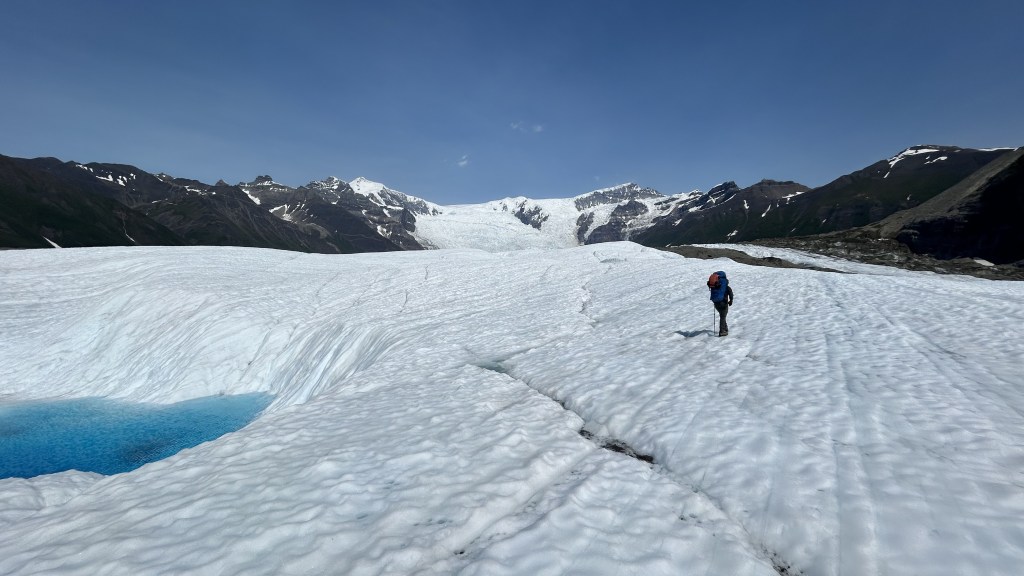
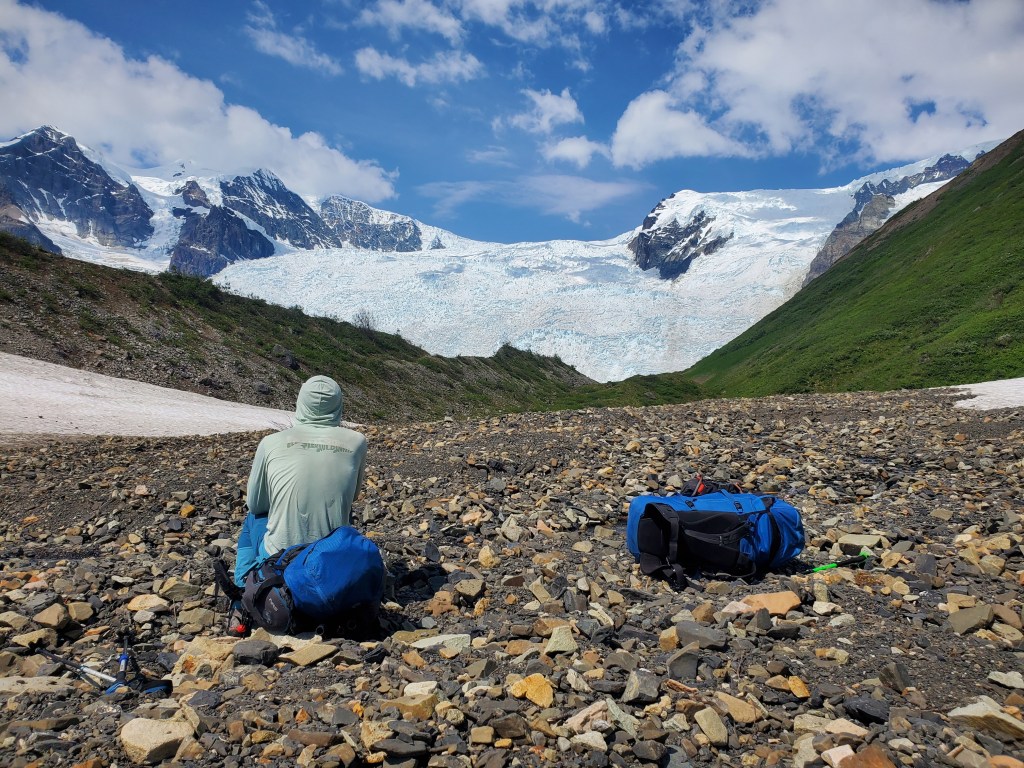
After a moment of walking parallel with the glacier, we found ourselves at the base of our climb. A 2,000 foot climb stood between us and the pass we were heading to. The first two-thirds of this climb held supportable snow throughout the gully. This made for easy movement and ended with a cascading waterfall that flowed into the patch of snow we were on.
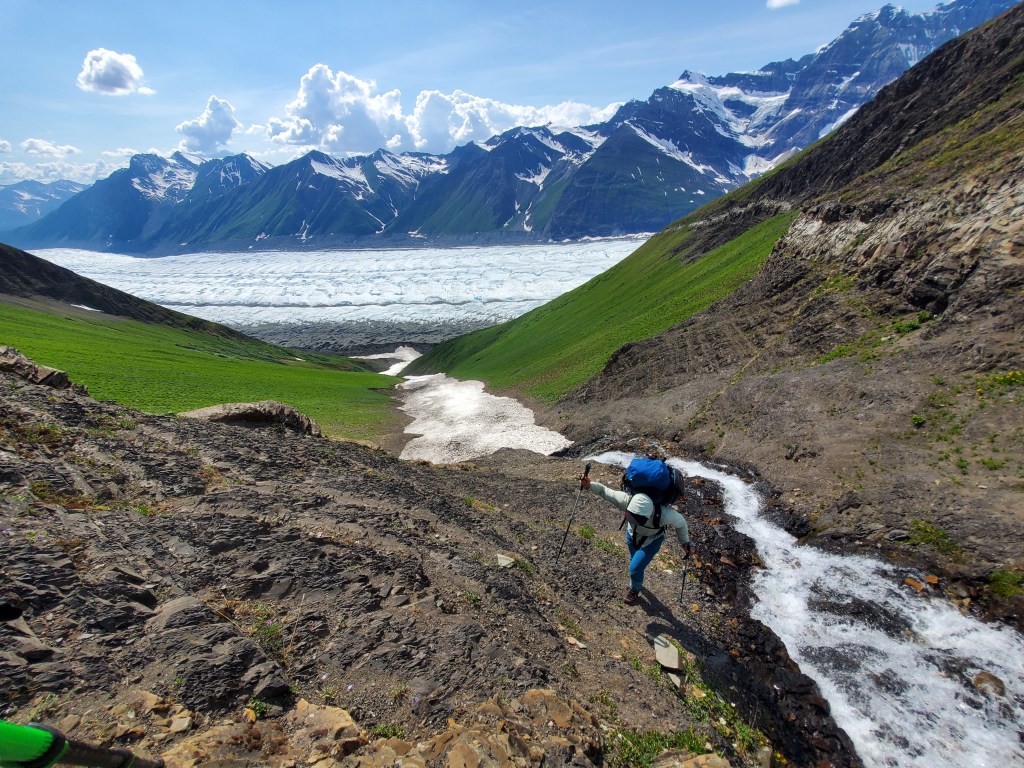
After filling up bottles, we continued upwards on the loose limestone that the Wrangell Mountains are known to hold. After gaining the elevation we needed to clear the pass, we did a high traverse through a series of snow patches. On our way through, many loose wet slides were released from the snow; a good reminder to stay stable on our feet. We made our way to the pass, and we were treated to incredible views of the McCarthy Creek Glacier and Stairway Icefall at the same time. I found it amazing to see how the two were connected at around 8,000 feet.
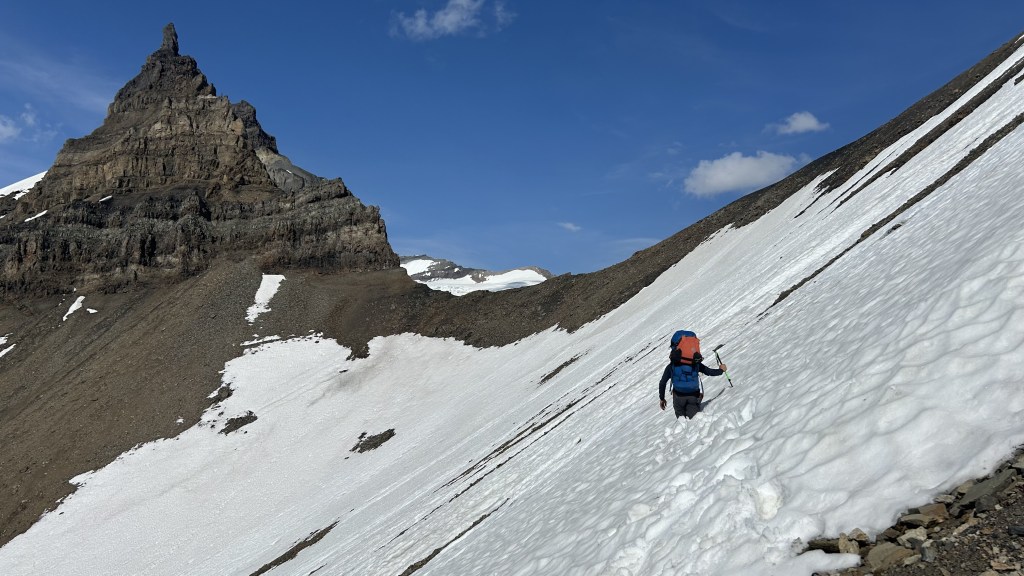
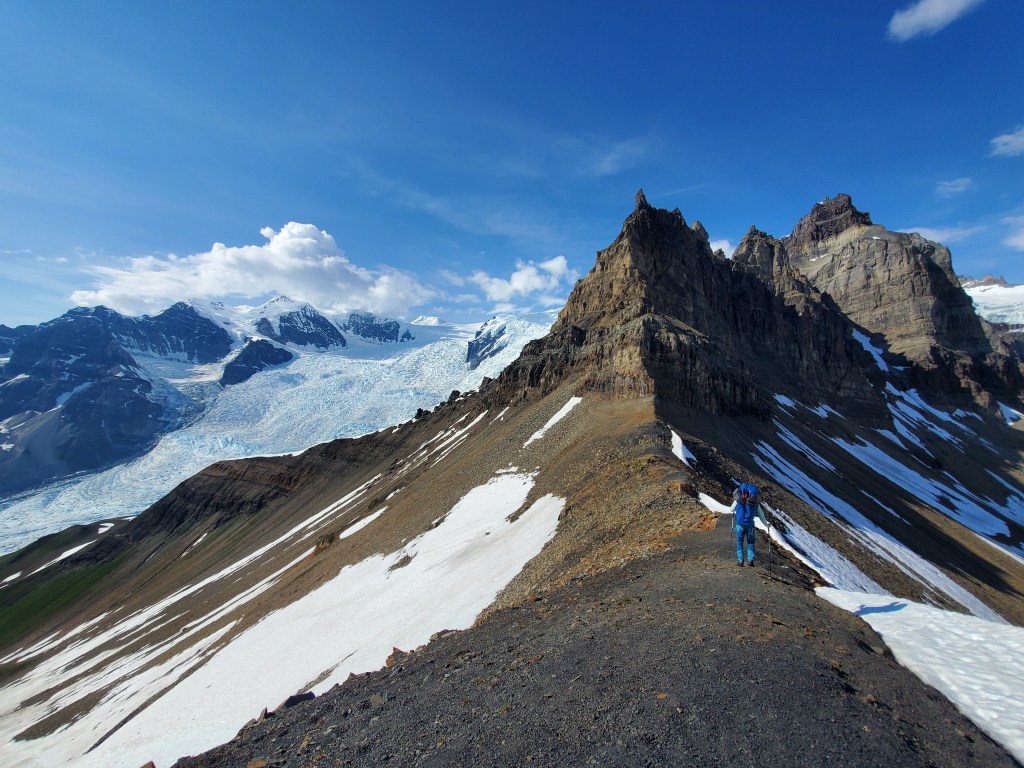
On the backside of the pass, we aimed for tundra benches around 1,500 feet below the pass. This would set us up well for an early start to our paddling the next morning. Downhill travel was a relief after over 4,000 feet of climbing throughout the day. We found a flat spot to call home for the night located near an exposed stream that ran underneath a snow patch. From camp, we watched several seracs shed off the hanging McCarthy Creek Glacier and take the freefall to the lower, rocky portion of the glacier.
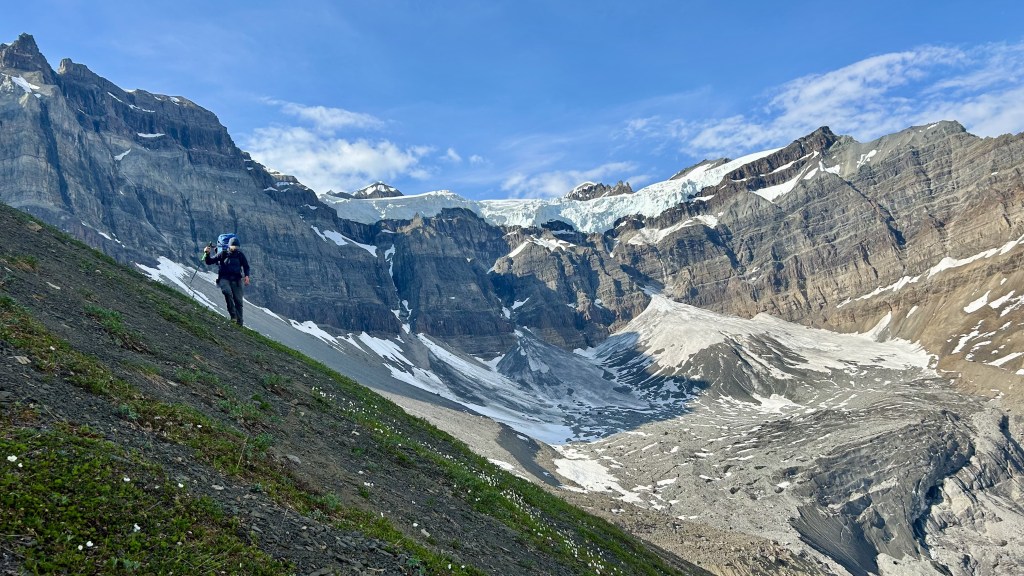
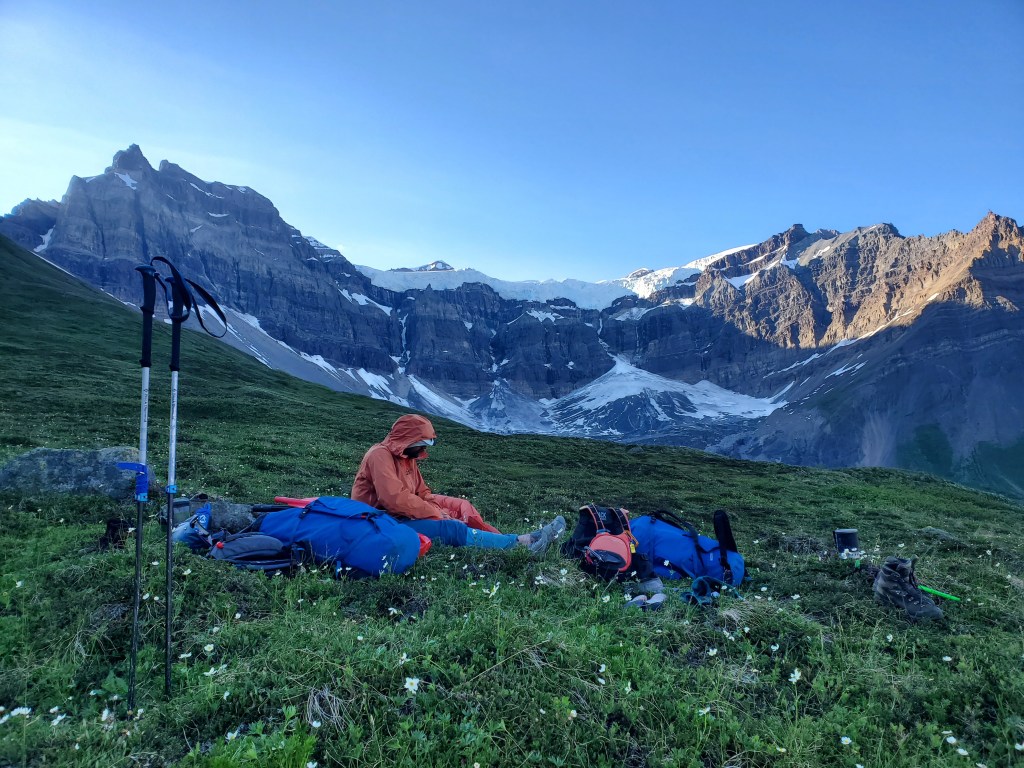
A speedy breakfast the next morning allowed us to reach our put-in early in the morning. I began setting my boat up while Cody scouted downstream of us. As I was concluding my setup, Cody arrived back with news of a meaty rapid a few hundred feet downstream. We chose to put in beneath the rapid instead of starting our day with a painful swim through powerful and shallow water.
After reaching our official put-in, we chatted a few last-minute safety protocols and headed onto the water. We began with some consistent class 3 creeking, which would be the story for the next 20+ miles. For the first hour beneath our put-in, we found ourselves making techy moves to negotiate lines through shallow rock gardens. The gradient was consistent, and the low flows so up high on the creek made for engaging paddling as more and more water joined the stream via waterfalls coming high on the mountainsides.
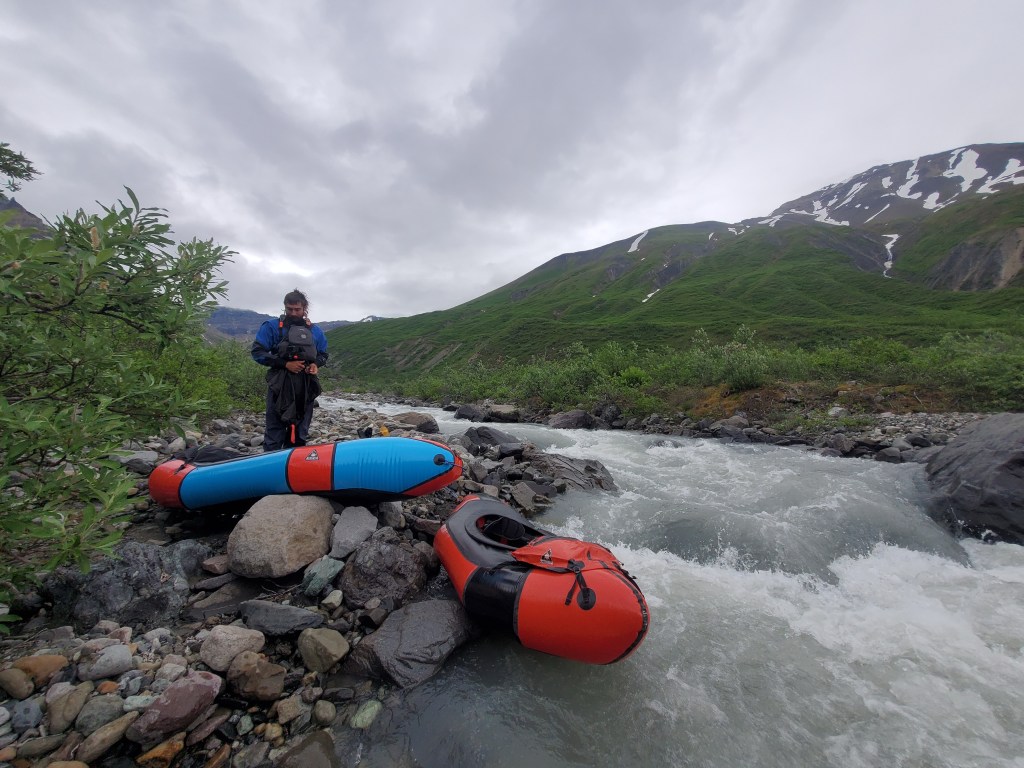
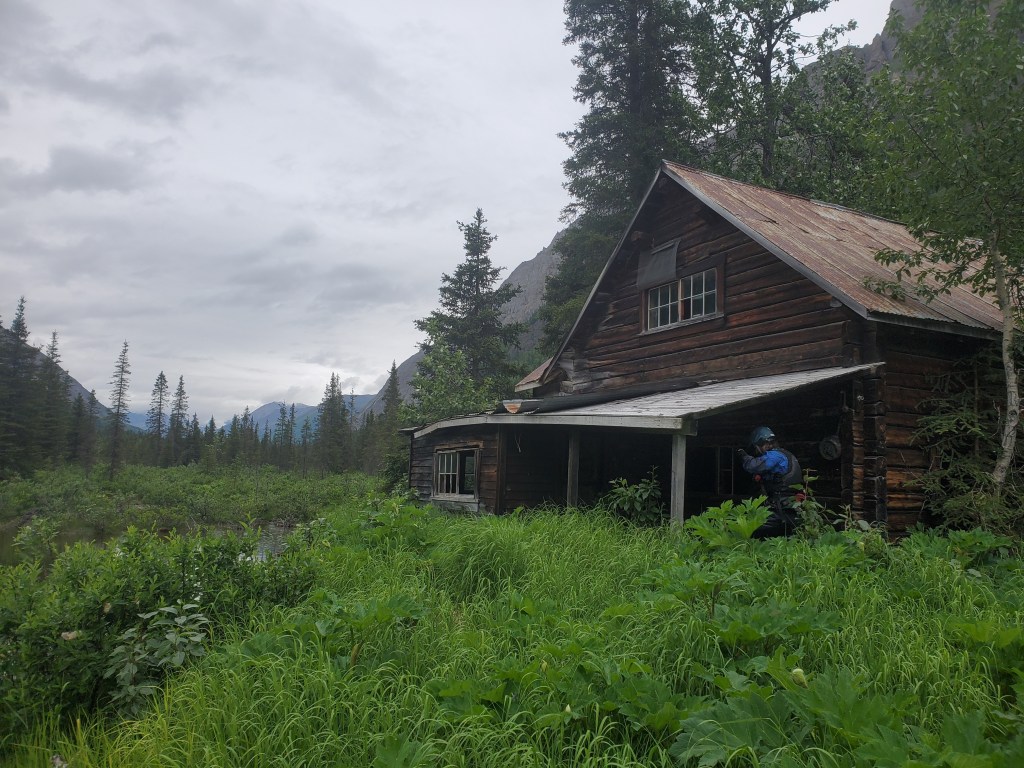
As we made our way through the upper sections, a few fun rapids raised the heart rate, but all went according to plan. Beautiful scenery sped past us with the water doing all the work to move us downstream swiftly. On our way, we stopped at a few abandoned cabins to investigate the rich mining history of McCarthy Creek. We signed our names in a modern logbook we found in one of the cabins; this served as our only trace of passing through the area.
After our stops, we found ourselves quickly approaching a stout canyon rapid that sits between a class IV and V. The remoteness of the rapid only adds to the consequence. We pulled over to scout the rapid, and after much deliberation, both Cody and I decided to run it. Cody had run the rapid twice prior, with the second of the two going clean. This was my first time venturing into a rapid of this nature, but on a mission to improve as a packrafter, I chose to take the risk and expose myself to what remote class IV provides.
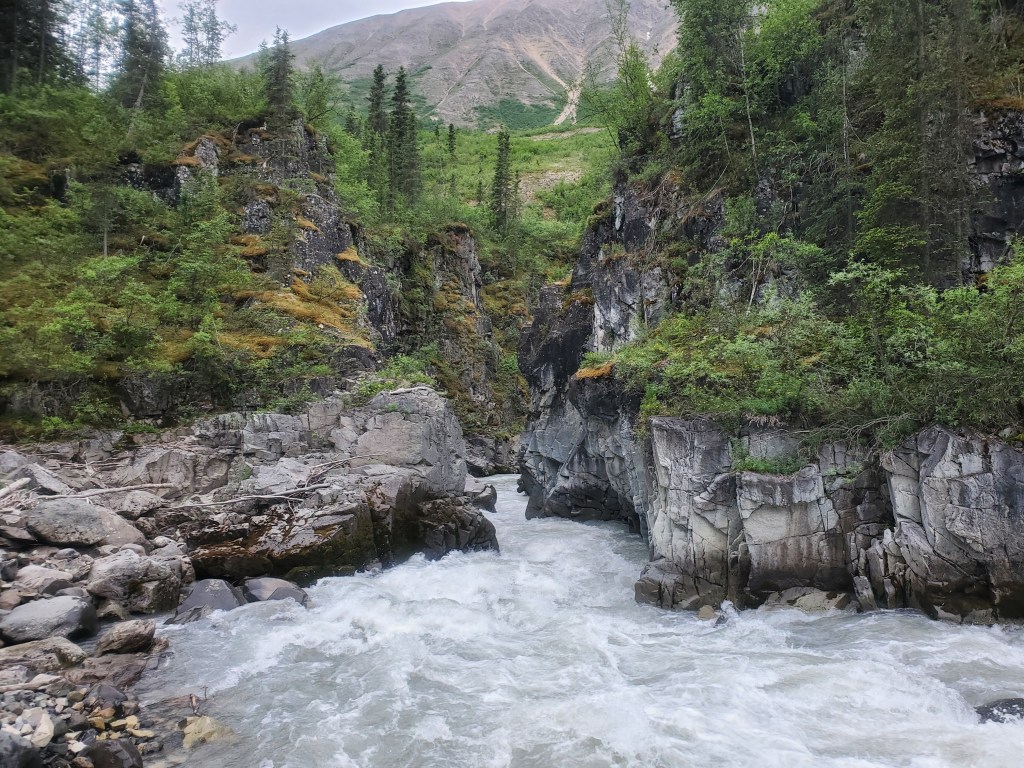
We talked through our lines and dropped in. As soon as we hit the first drop, I knew I was not cut out for what I was getting myself into. I took a spill and caught my boat in an eddy. Before I could get myself situated, I found myself being pulled back into the rapid. I quickly tipped back over and swam to an eddy where I could reset and continue the run. After struggling with my spray skirt in the surging eddy, I finally was situated and dropped in. I ran the center of the canyon clean, but I knew the exit was the biggest feature of the canyon. As I approached it, I planted my paddle and took the strongest boof stroke I could muster, but this was not enough to propel me over the wave on the far side of the recirculating hole. Before I knew what happened, I was out of my boat underneath the curtain of the hole. Flailing to escape provided no success, so after multiple dunks, I found the composure to dive under the water to escape the haystacks on the surface. This was the ticket to escape, but as I emerged I was fully sapped of energy. I found myself bouncing off of wood within the river without the energy to swim away. As I drifted past the logjam, I knew I was safe from most entrapment hazards. While this was relieving, I was aware of the beatdown coming my way as I headed into a field of big holes waiting to throw me into the rocks lining their bottoms. After a few impacts, I was home-free and able to use the last of my energy to crawl onto shore.
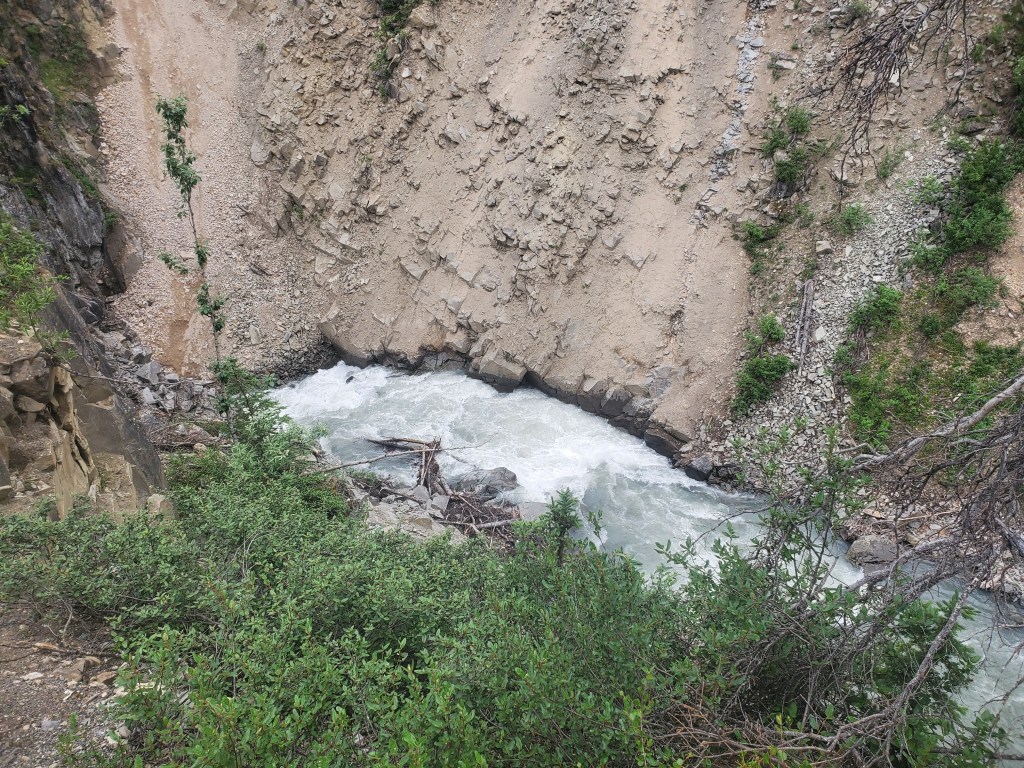
Upon reaching the shore and regrouping with Cody, the full scale of the carnage revealed itself. Both of us took the same swim and lost our boats, and I had gone as far as to lose my paddle as well. We resorted to hiking, and soon enough found my boat stuck in an eddy. Cody threw a throw bag with a stick attached and managed to free it, and I was downstream to catch it. Now with one boat and a paddle, we could make slightly faster progress downriver. We tandem paddled the one boat with limited success and were glad to find Cody’s boat only a few minutes down. We got to it and were back to business; with the spare paddle in Cody’s boat we were able to proceed as planned.
As we continued downstream, our paddling started to become fatigued. A lack of focus as energy was depleted led to a few more mistakes on the river, but all were quickly sorted out. After an amazing rapid named The Grotto, we were nearing familiar territory. The consistent creaking continued, with the occasional drop that would lead to an exciting rapid.
A few turns later, we approached Z Rock, and then the beach I have often put in at. There was a sigh of relief as I realized we were in the water I had seen before. From there on, we ran the rest of the creek near mindlessly. Even though the river does not let up, we both knew this stretch after countless laps down it.
Next, like a lighthouse beaconing, we saw the Powerhouse that we SEAG employees call home appear from around the corner. We eddied out just above the Nizina Road bridge and walked across the street to our home for the summer. This marked the end of our journey, but with the long days that the Alaskan summers are famous for, I had ample time to reflect on the trip that evening.
The boating provided a prolonged flow state that can be hard to find in almost any other sport. The requirement to stay constantly focused without the chance to stop is something unique to boating. That flow state is what I chase in boating, and I realized it is easy to escape the upper bounds of that state. As I pushed my limits boating, I found myself more scared and nervous which then made my reactions in the boat less precise and deliberate. It is safe to say I found where my line is, and what I am looking for in boating on this trip. While I am glad I ventured into higher grades as a way to push myself, I don’t see myself chasing those grades into the future. Sitting in the world of class III seems likely for me, and if I do push grades it will be a few seasons out.
 Kip Sprout
Leave a comment